
LKA Summer Melon & Parsley Pesto Bocconcini Salad: A Montessori Cooking Activity for Summer
Kids in the Kitchen is our blog series, where in collaboration with Click and Grow, we’re sharing Little Kitchen Academy recipes and tips for getting kids interested in food and involved in the kitchen.
There’s a particular week in July when the farmers’ market tables are vibrant with seasonal produce, and fresh herbs in the garden have gone bushy and wild. This is peak season, where the summer ingredients are at their sweetest and most fragrant.
For families who weave Montessori principles into everyday life, peak season is a beautiful opportunity for learning. Ripe cantaloupe tastes sweet and buttery. Fresh parsley smells sharp, green and alive. Children’s senses are heightened in summer, and a kitchen counter covered in melon halves and herb sprigs is really an invitation: come smell this, come touch this, come wonder about this.
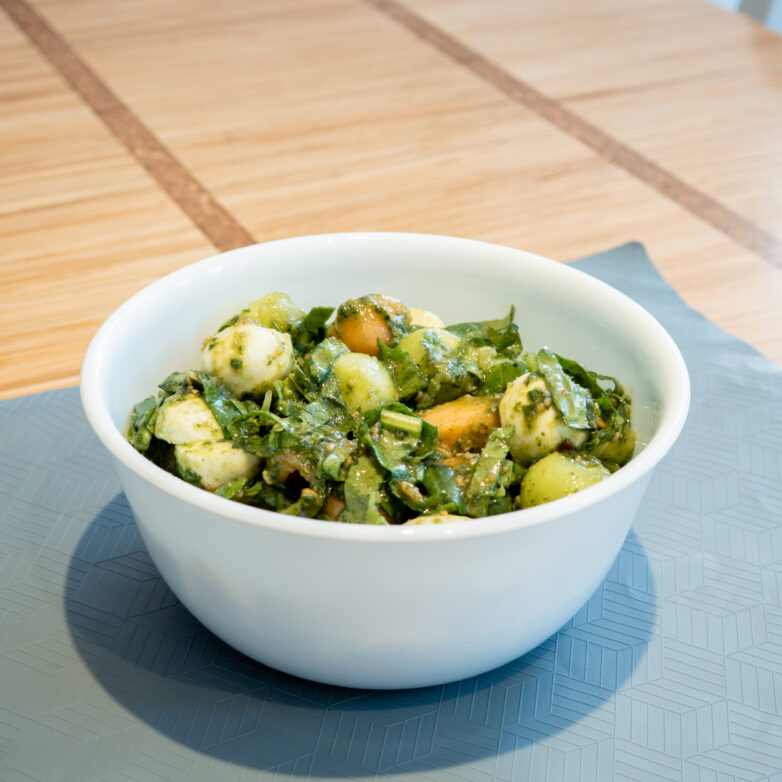
This month’s recipe in collaboration with Click & Grow leans into that invitation. LKA’s Melon & Parsley Pesto Bocconcini Salad comes together with cool melon, creamy little balls of bocconcini, and a bright, herby pesto that adds to the usual basil formula with something greener and more surprising: parsley.
Below, the recipe steps are woven together with moments to pause, ask your child a question, hand over a tool, or raise a challenge for an older child. Read them together as you cook.
A Montessori Cooking Activity for Summer
At home, recipes like this create moments you’ll remember: when your child walks into the kitchen, gathers ingredients, and starts preparing something for themselves without being asked. That’s when cooking becomes more than a skill… It becomes confidence.
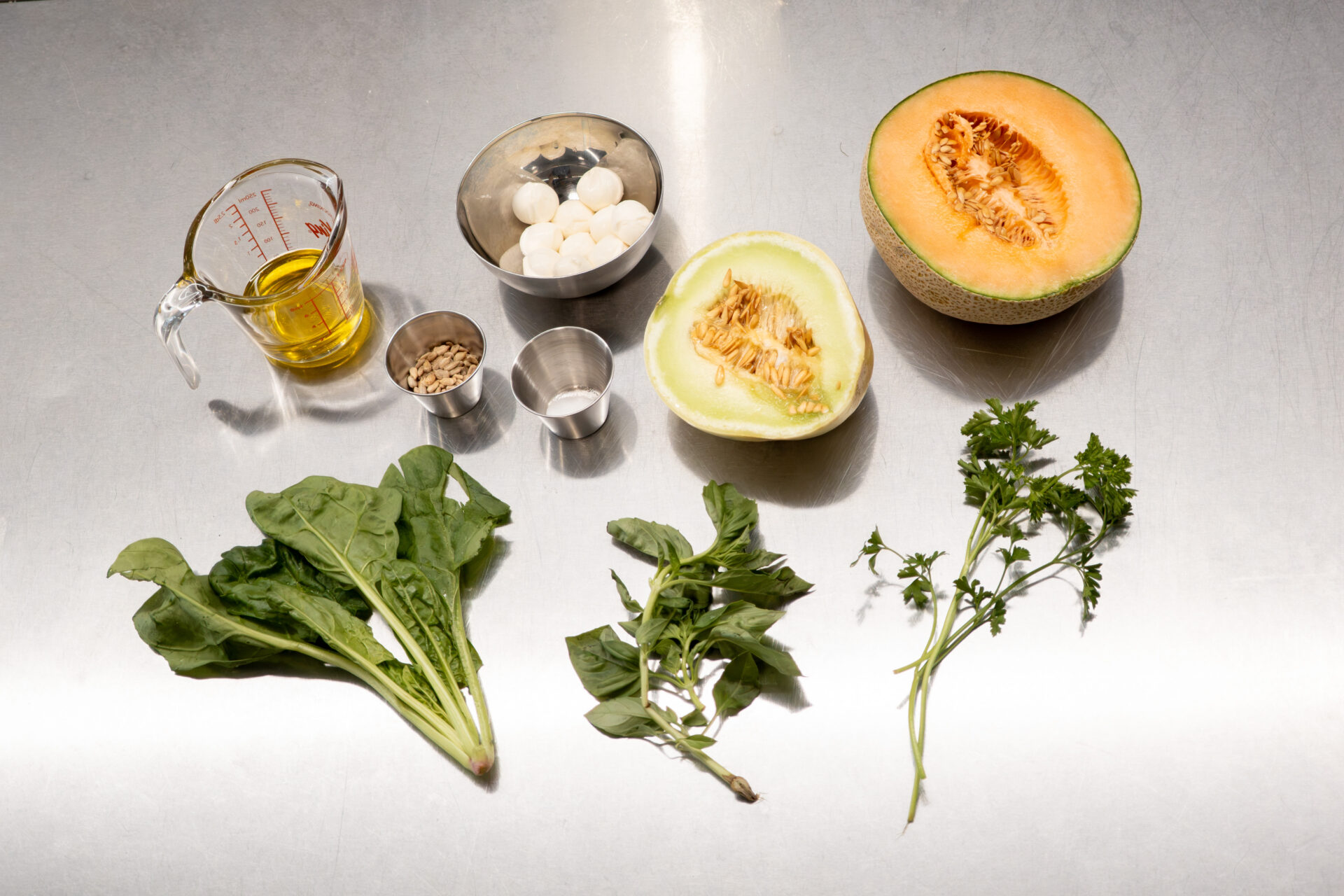
Prep time: 15-20 minutes | Serves: 2-3
Ingredients
- 2 wedges cantaloupe
- 2 wedges melon
- 6-8 fresh mini bocconcini
- 6-8 sprigs fresh parsley
- 3-4 fresh basil leaves
- 1/4 cup olive oil
- 2 tbsp sunflower seeds
- 1/4 tsp salt
- 30 g fresh spinach
Instructions
- Using a melon baller, scoop the cantaloupe and melon.
Montessori Moment: The Melon Baller as a Tool
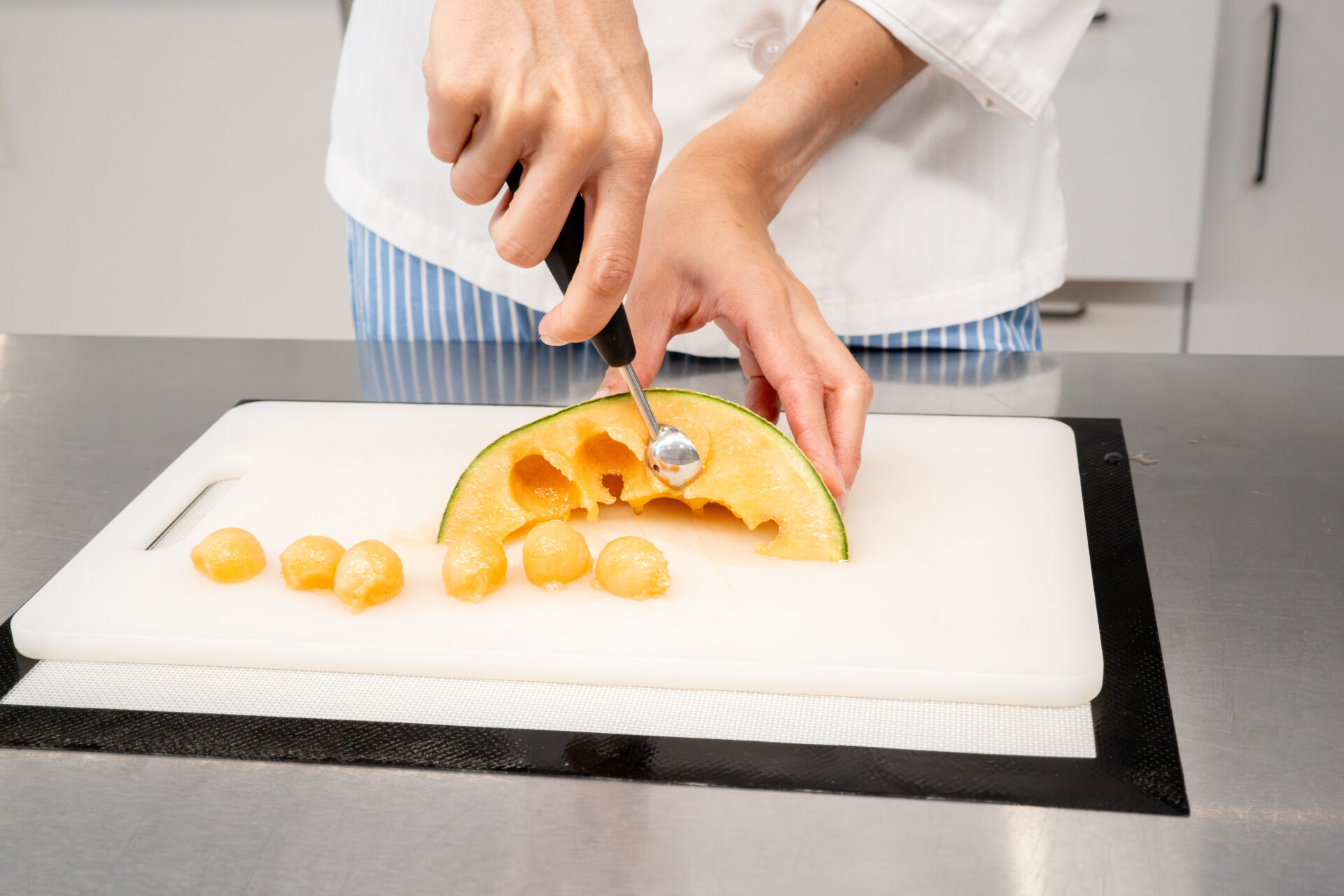
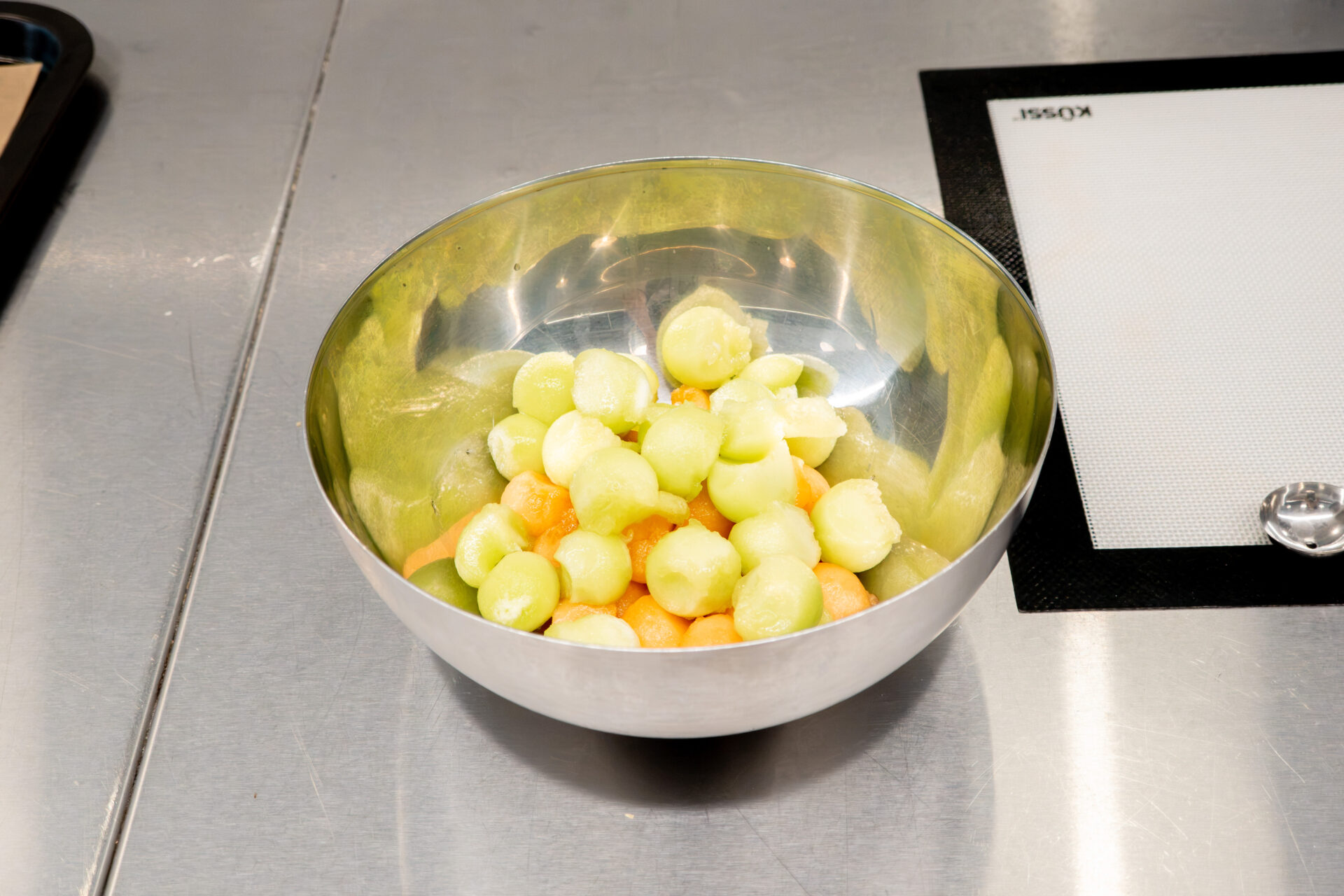
Intelligent Purpose: Refinement of motor skills, building muscle memory and strength as the child scoops the cantaloupe and melon into spheres for the salad.
Point of Interest: The scraping sound of the baller against the melon rind, watching the round scoop pop up out of the fruit, and discovering the two different melon colors and sizes side by side.
Control of Error: If not enough pressure is applied, the melon baller won’t cut cleanly through the flesh, and the scoop will come out flat or misshapen instead of a full sphere.
2. Chiffonade the spinach. This is a good moment to allow your older child to try a new technique: a chiffonade cut. If your older child is comfortable with a knife and has been introduced to the technique, let them practice on their own, with you nearby rather than guiding their hands.
If your older child hasn’t been introduced to knife safety yet, or you’d like a refresher before they try, check out our knife safety videos here: https://littlekitchenacademy.com/progressive-knife-set/knife-safety/
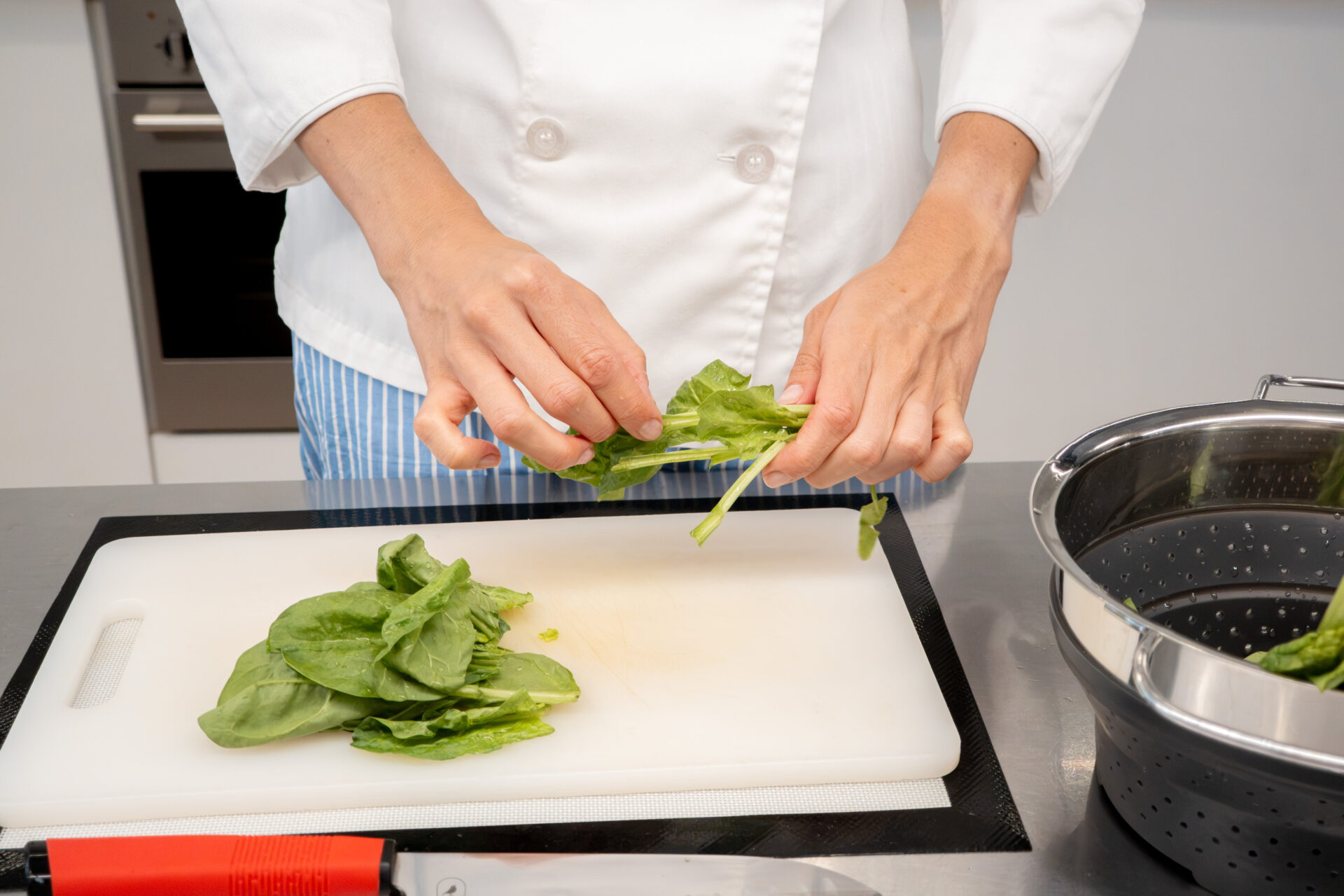
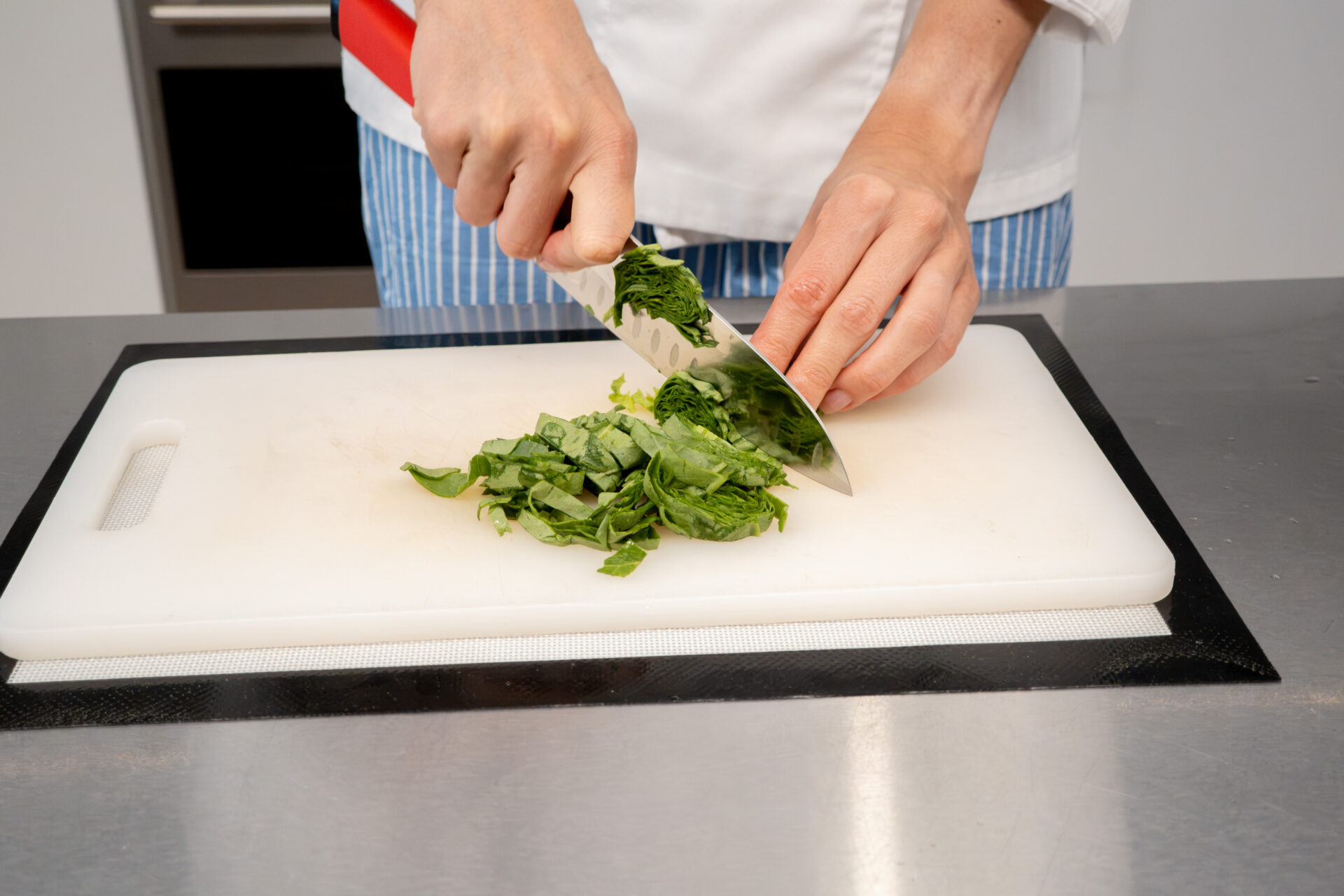
3. Cut the bocconcini in half. Halving the bocconcini is a simple but satisfying task for children developing their knife skills. Encourage your child to notice the soft texture inside each cheese ball and compare it to the smooth outer surface.
4. In a blender, place the parsley, basil, olive oil, sunflower seeds, and salt. Blend until smooth. Before it goes in the blender, invite your child to smell the parsley and basil side by side. Try asking, rather than telling: “What does this remind you of?” or “Do you think it will taste as strong as it smells?” Let them press the blender button and watch whole sprigs transform into a smooth green sauce.
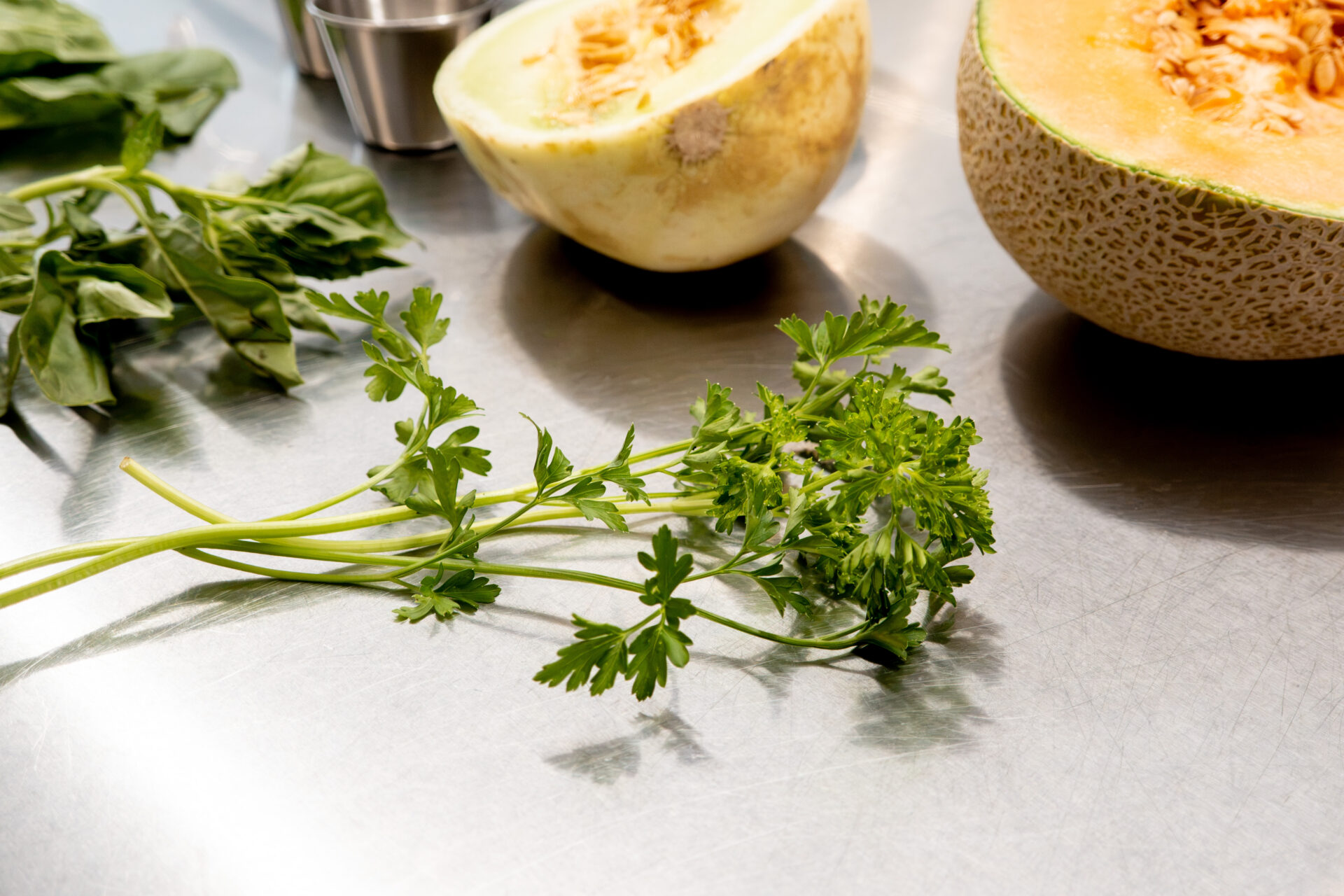
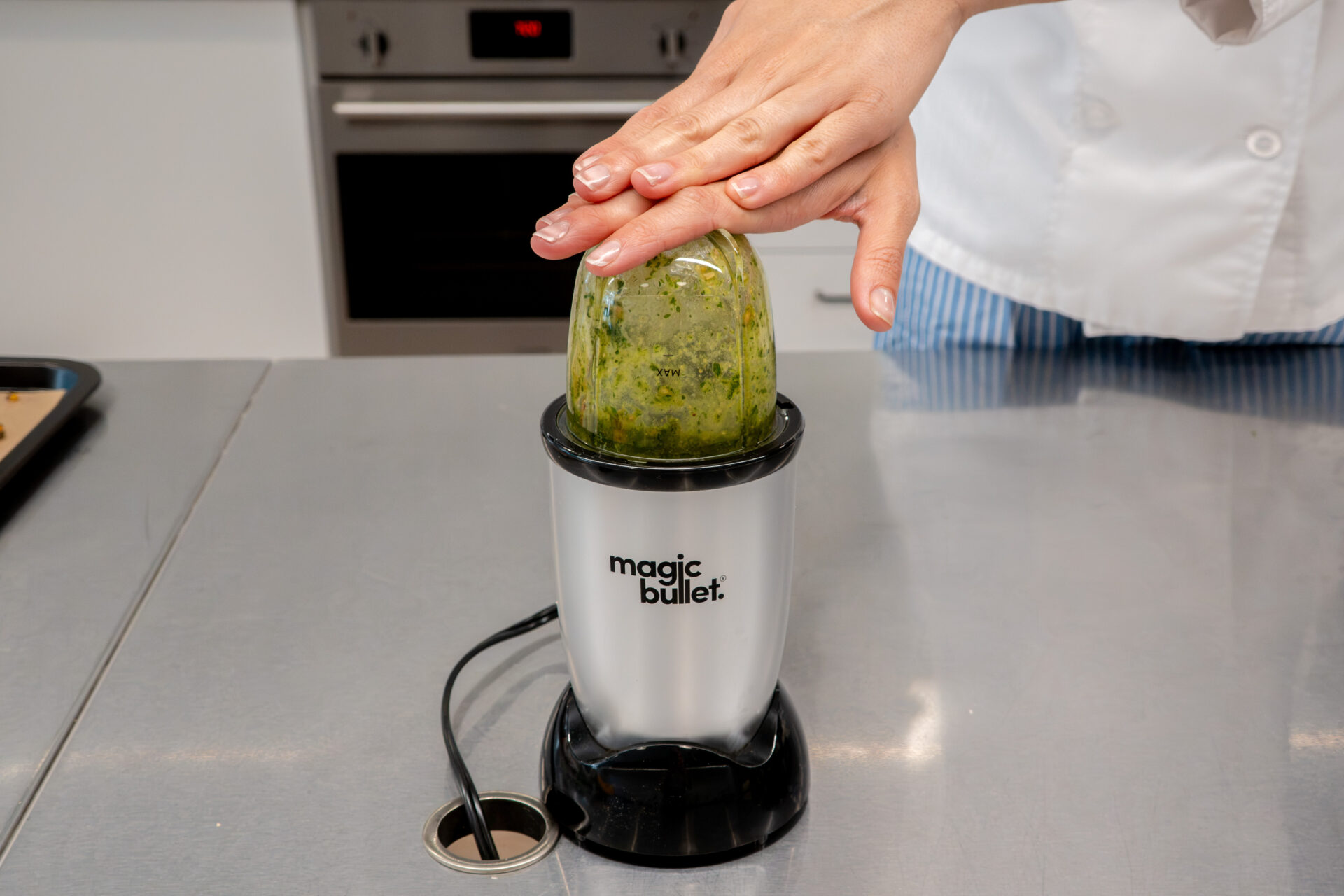
From our Living Food Wall: Parsley is one of the many ingredients students can grow and harvest from our Click and Grow Smart Gardens. Harvesting ingredients before preparing a recipe helps children understand where food comes from and creates a deeper connection to what they’re eating.
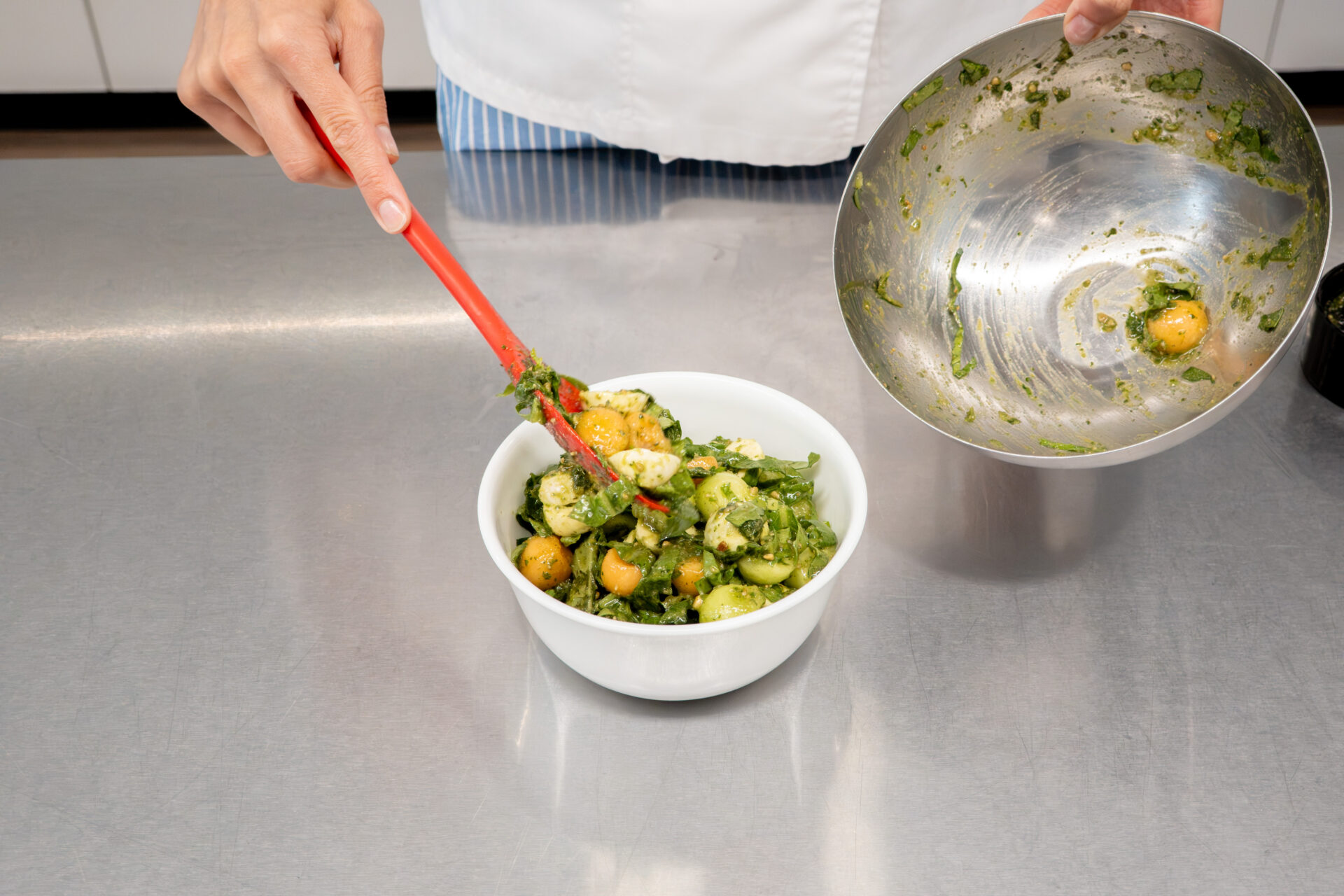
5. Pour the parsley pesto into a bowl with the bocconcini and toss to evenly coat. Tossing is its own small lesson in controlled movement through turning a spoon just enough to coat the bocconcini without splashing pesto over the counter. If a little spills, resist the urge to jump in; let your child notice it and decide how to clean it up. That, too, is the lesson.
6. Arrange the spinach in a serving bowl along with the cantaloupe and melon
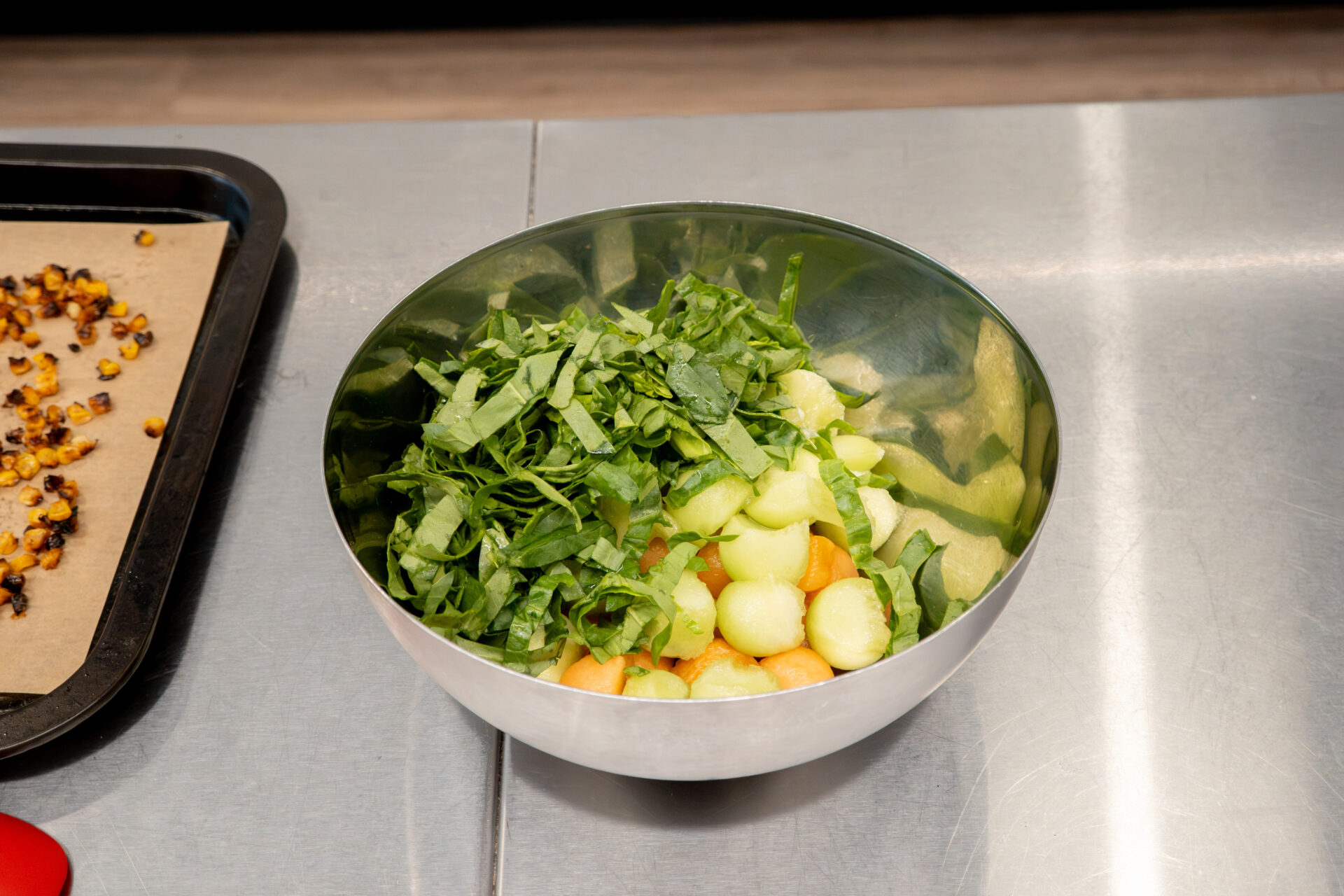
At Home Tip: Invite your child to think about presentation as they build the salad. Should the melon colors be mixed together or grouped? Can the spinach create a soft green bed underneath? Even simple plating choices help children develop an appreciation for beauty and intention in the kitchen.
7. Add the bocconcini to the serving bowl and pour the remaining parsley pesto over the salad. Task your older child with making this salad as their contribution to a family barbecue or dinner party: their job, their timeline, their plating. Let them decide on garnish and presentation. Ownership of the result is where real kitchen confidence comes from.
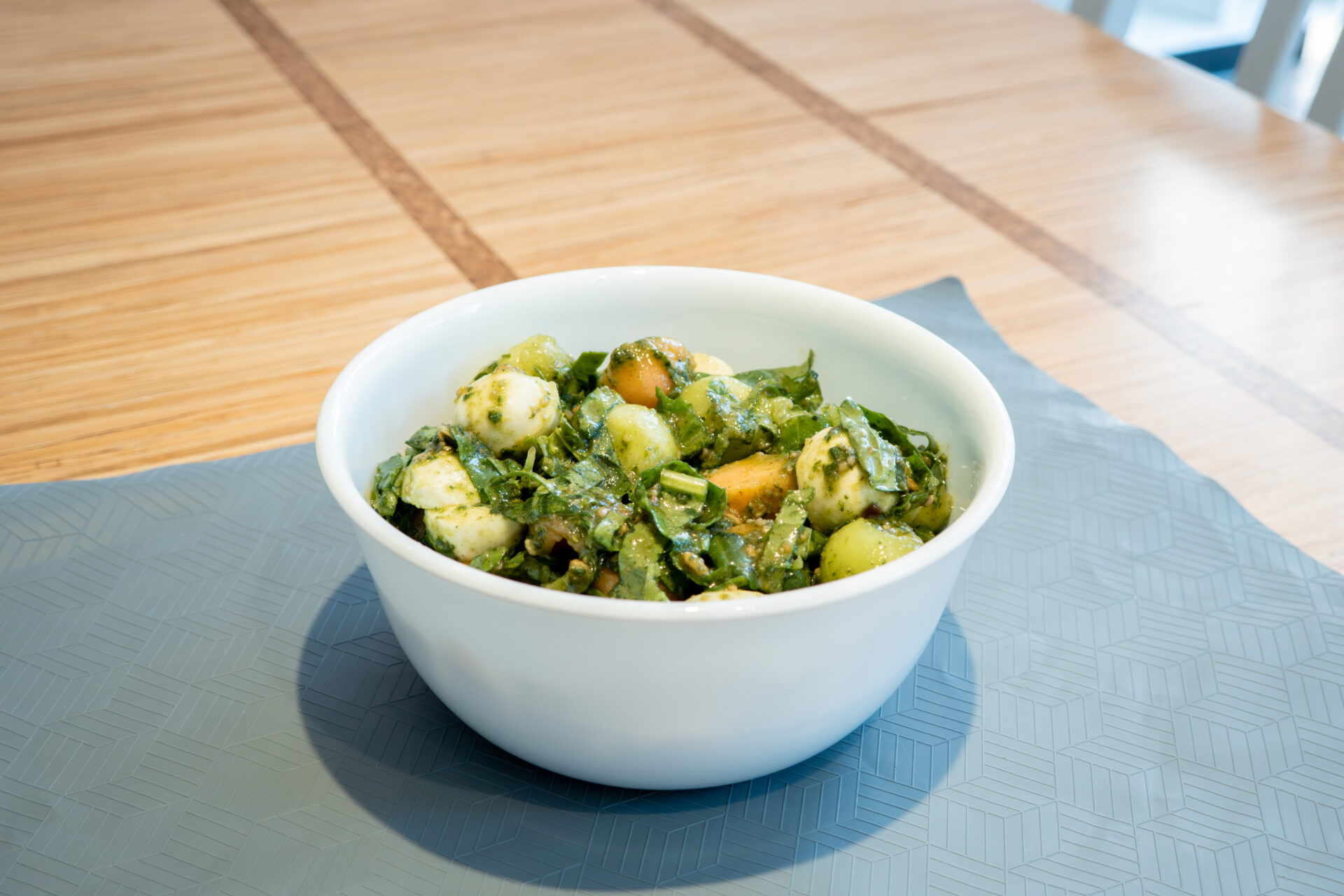
8. What makes this salad special is that nearly every step doubles as a Montessori cooking activity, if you let it. The melon baller becomes a lesson in fine motor control and control of error. The parsley becomes a growing project with a beginning, middle, and delicious end. And the finished bowl becomes something worth being proud of, whether it was scooped by a three-year-old or plated by a fifteen-year-old for the family barbecue.
Summer only stays this ripe for a few short weeks. Let your kitchen counter be part of how you spend them.
Looking for more recipes? Visit the LKA blog.