
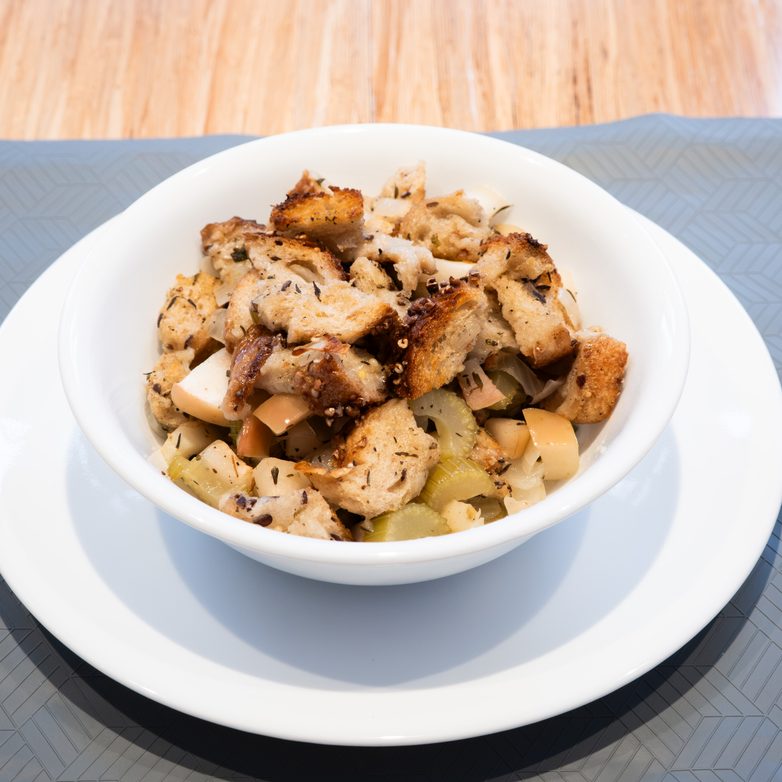
LKA Apple Sage Stuffing: A Place at the Family Table
Kids in the Kitchen is our blog series, where in collaboration with Click and Grow, we’re sharing Little Kitchen Academy recipes and tips for getting kids interested in food and involved in the kitchen. A Montessori fall cooking activity can be as simple as putting a seasonal ingredient on the counter and giving your child a real role in preparing it.
November brings us back to the table.
Meals linger a little longer. Recipes get passed around. Kitchens fill with people chopping, stirring, tasting, and finding ways to help. For children and teens, that makes this season an opportunity to experience something important: contributing to a meal for the people they love.
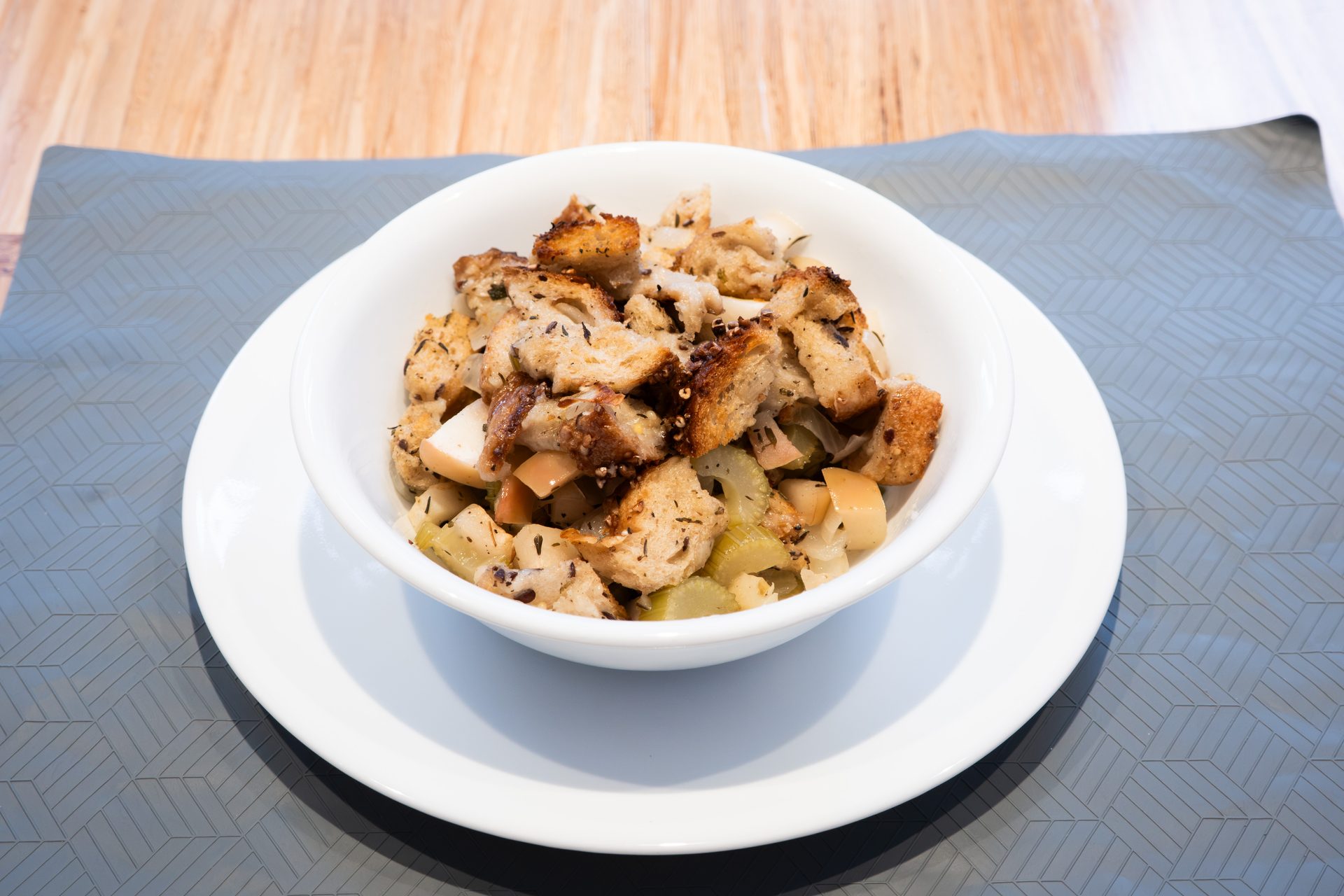
LKA’s Apple Sage Stuffing combines chopped bread with apple, celery, onion, sage, and thyme before everything is baked together until beautifully golden and crisp. There are ingredients to prepare, changes to observe, and a whole dish that your child can proudly place on the family table.
Later, when everyone gathers and someone asks who helped with the stuffing, your child has a story to tell and the quiet pride of knowing they contributed to a meal for loved ones.
Prep time: 45-55 minutes | Serves: 4 portions
Ingredients
- 4-5 thick slices day-old loaf bread
- 60 g yellow onion, finely diced
- 50 g celery, finely diced
- 100 g apple, peeled and diced small
- 25 g unsalted butter
- 1 sprig fresh sage, finely chopped
- 1/2 tsp dried thyme
- 1/2 tsp Dijon mustard
- 1/4 tsp salt
- 1/8 tsp black pepper
- 1/2 cup vegetable broth
Instructions
1. Preheat oven to 375°F.
Gather the ingredients and tools together before beginning. Invite your child to name the ingredients they recognize and explore anything unfamiliar. Having what they need within reach helps them follow the process with greater independence.
2. Cut the bread into cubes about 1-2 cm thick and place in a large bowl.
Montessori Moment: Cutting with Purpose
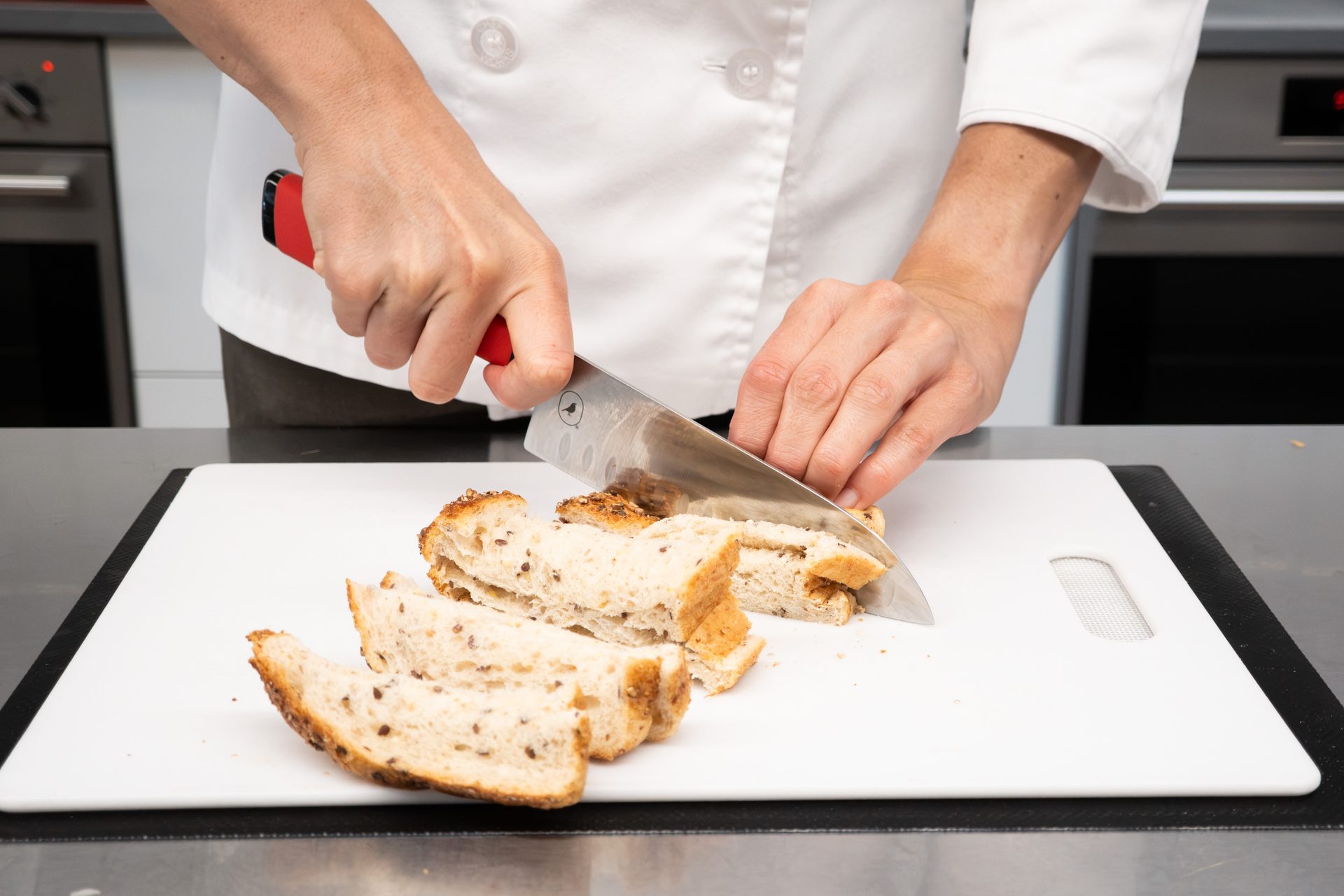
Intelligent Purpose: The direct purpose is preparing evenly sized pieces of bread for the stuffing. The indirect purpose is that cutting develops hand-eye coordination, controlled movement, concentration, and the ability to judge size and consistency. For older children, the challenge can extend further, like understanding how the size of the bread pieces affects broth absorption and texture.
Point of Interest: Younger children can compare their pieces with a reference cube and explore how cutting through the crust feels different from cutting through the soft middle. Invite older students to decide how they’ll cut the loaf into consistent 1-2 cm cubes without compressing the bread. What sequence of cuts will they use? How might larger or smaller pieces behave differently in the stuffing?
Control of Error: The bread cubes provide visible feedback. A cube that’s much larger or smaller than the others stands out, allowing your child to notice the difference and adjust their next cut themselves.
3. In a pot over medium-low heat, melt the butter. Add the onion and celery and cook for about 3-4 minutes. The onion will become translucent and the celery will soften.
Invite your child to watch the ingredients as well as the timer. The onion begins firm and opaque, then becomes softer and increasingly translucent. Ask, “What do you notice now that you didn’t notice when we started?”
Learning to cook means learning to recognize these cues rather than relying on a timer to provide every answer.
4. Add the apple, sage, thyme, salt, and pepper and cook for an additional 2 minutes. Remove from heat and add to the bowl with the bread and toss.
🌱 From the Living Food Wall: Sage is one of the ingredients students can grow and harvest from our Click & Grow Smart Gardens. Encountering an herb as a living plant before preparing it helps children follow more of their food’s story, from growing and harvesting to cooking and sharing.
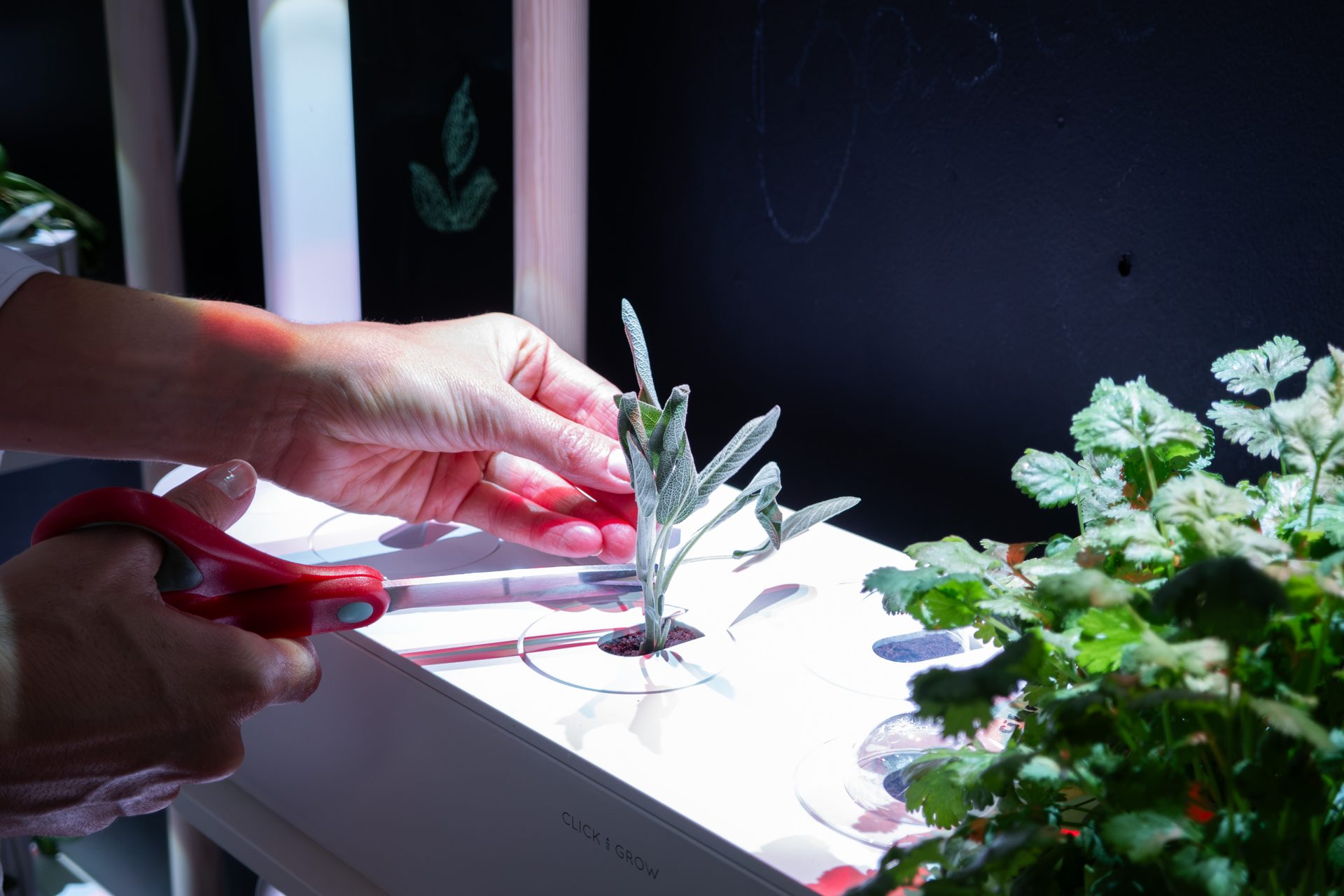
Before chopping the sage, invite your child to gently rub a leaf between their fingers and smell it. Compare it with the dried thyme: how do they look, feel, and smell? Let your child describe what they notice before offering words of your own.
The apple offers another contrast. It contributes sweetness, moisture, and texture, while the herbs bring distinct flavors and aromas. Ask your child what they think would change if one of those ingredients were left out. Understanding each ingredient’s role is part of learning how a recipe works.
5. Mix the Dijon mustard into the vegetable broth until evenly combined. Pour over the bread mixture and mix until all the bread is coated.
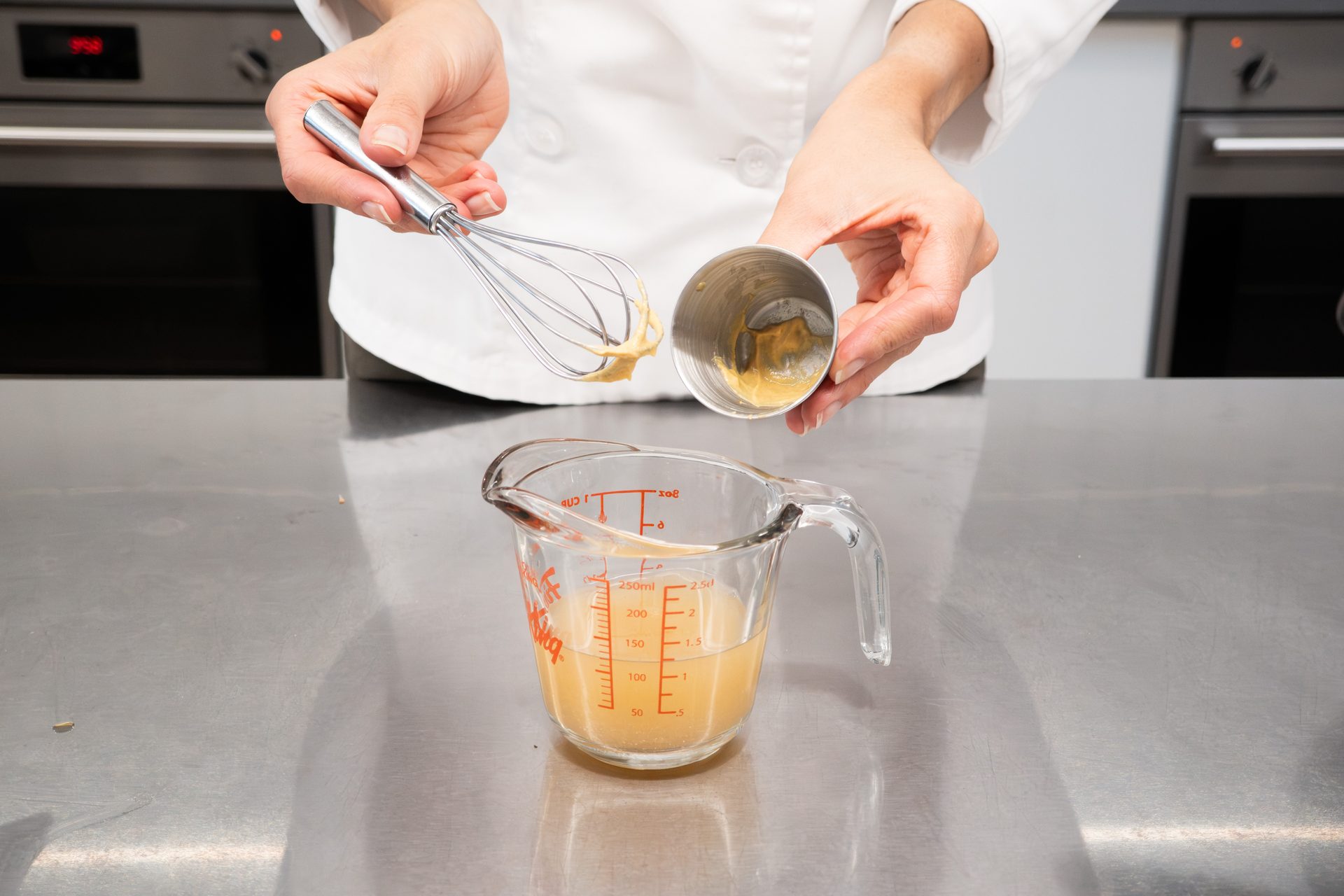
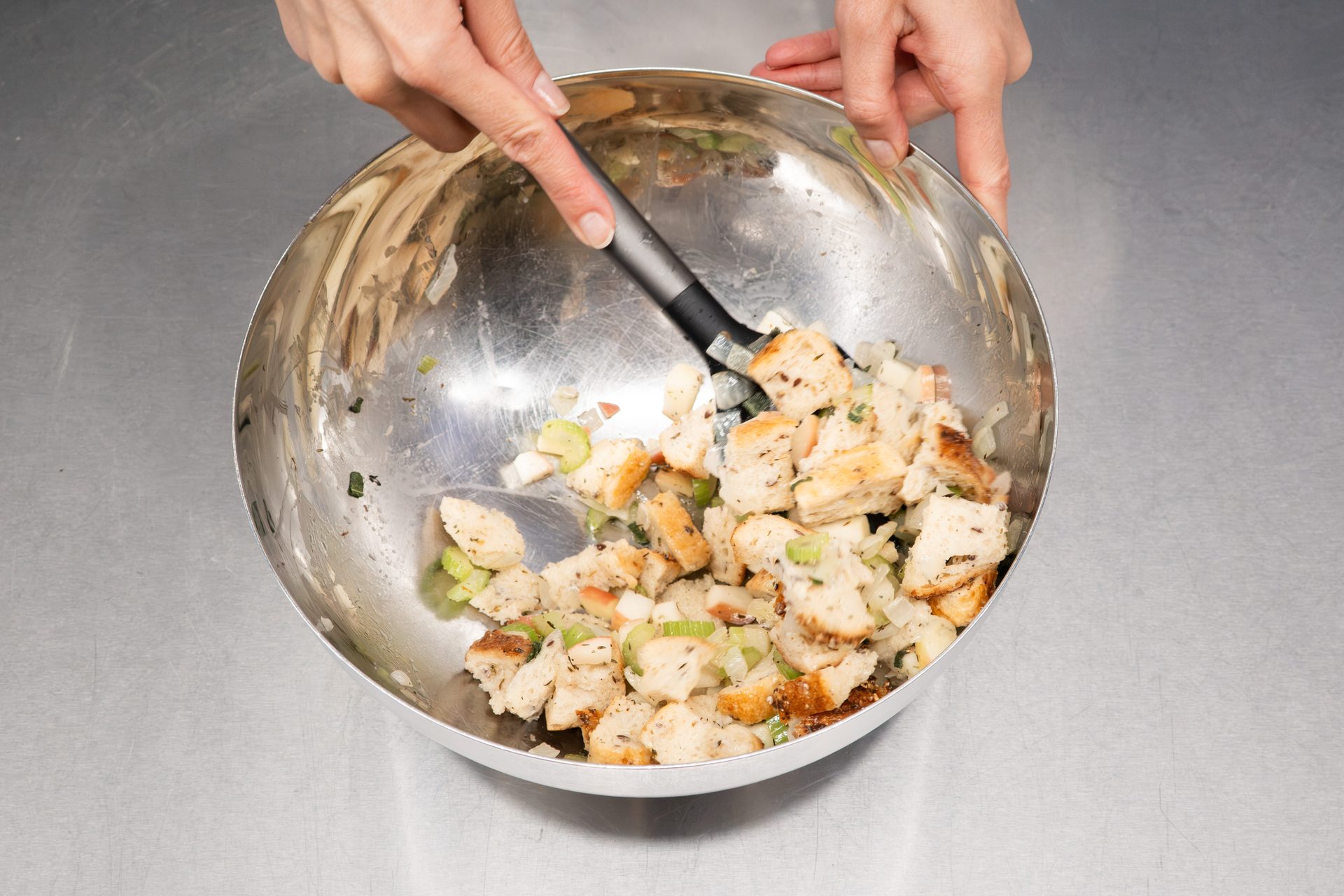
Before adding the broth, let your child gently press a dry bread cube. As they pour and mix, invite them to observe where the liquid goes and how the bread changes. Does it feel the same? Can they find pieces that are still dry?
The mixture provides feedback they can act on: dry pieces need more mixing to become coated. They can also see the broth’s purpose firsthand as it adds moisture and changes the texture of the bread.
6. Line a baking dish with parchment paper.
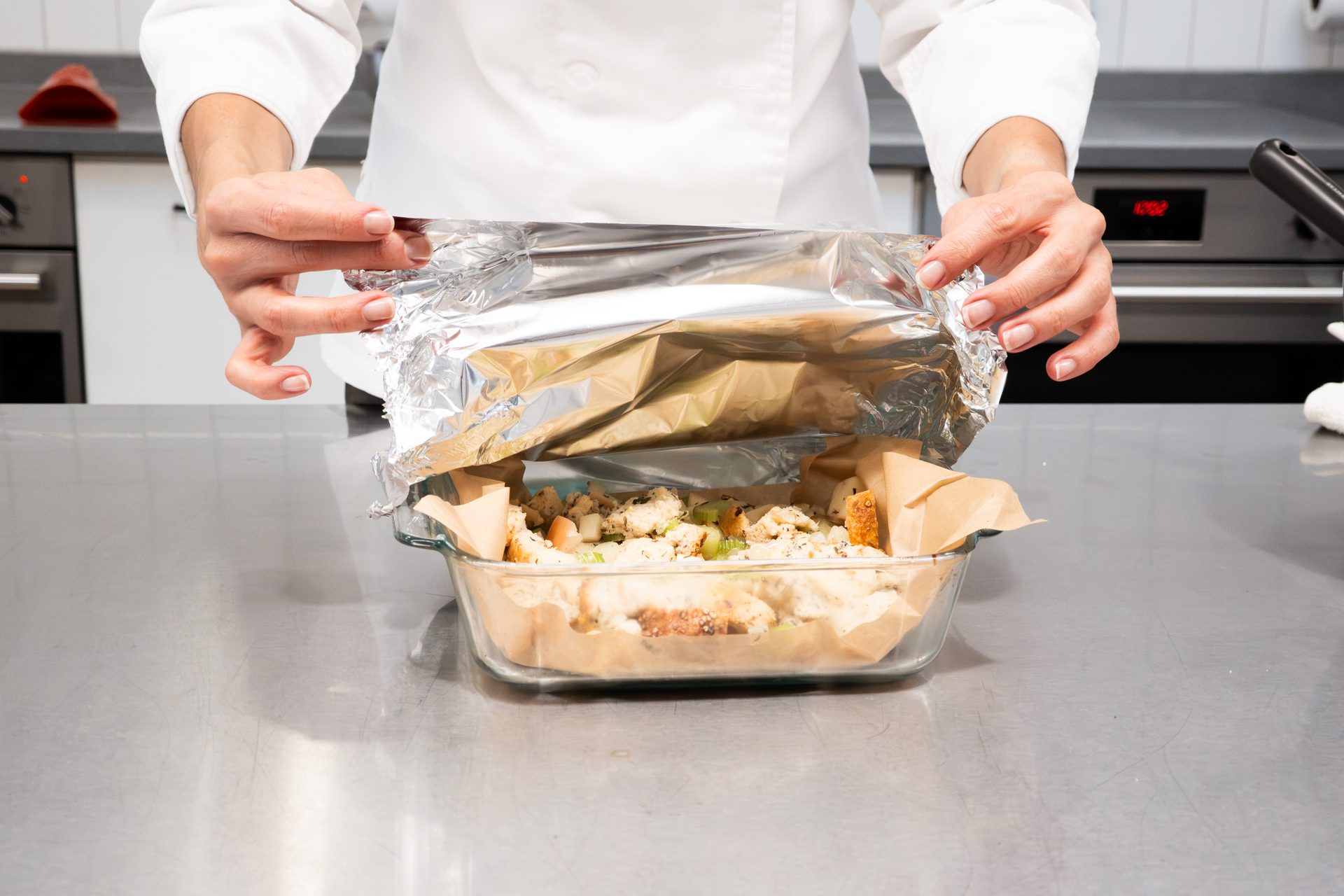
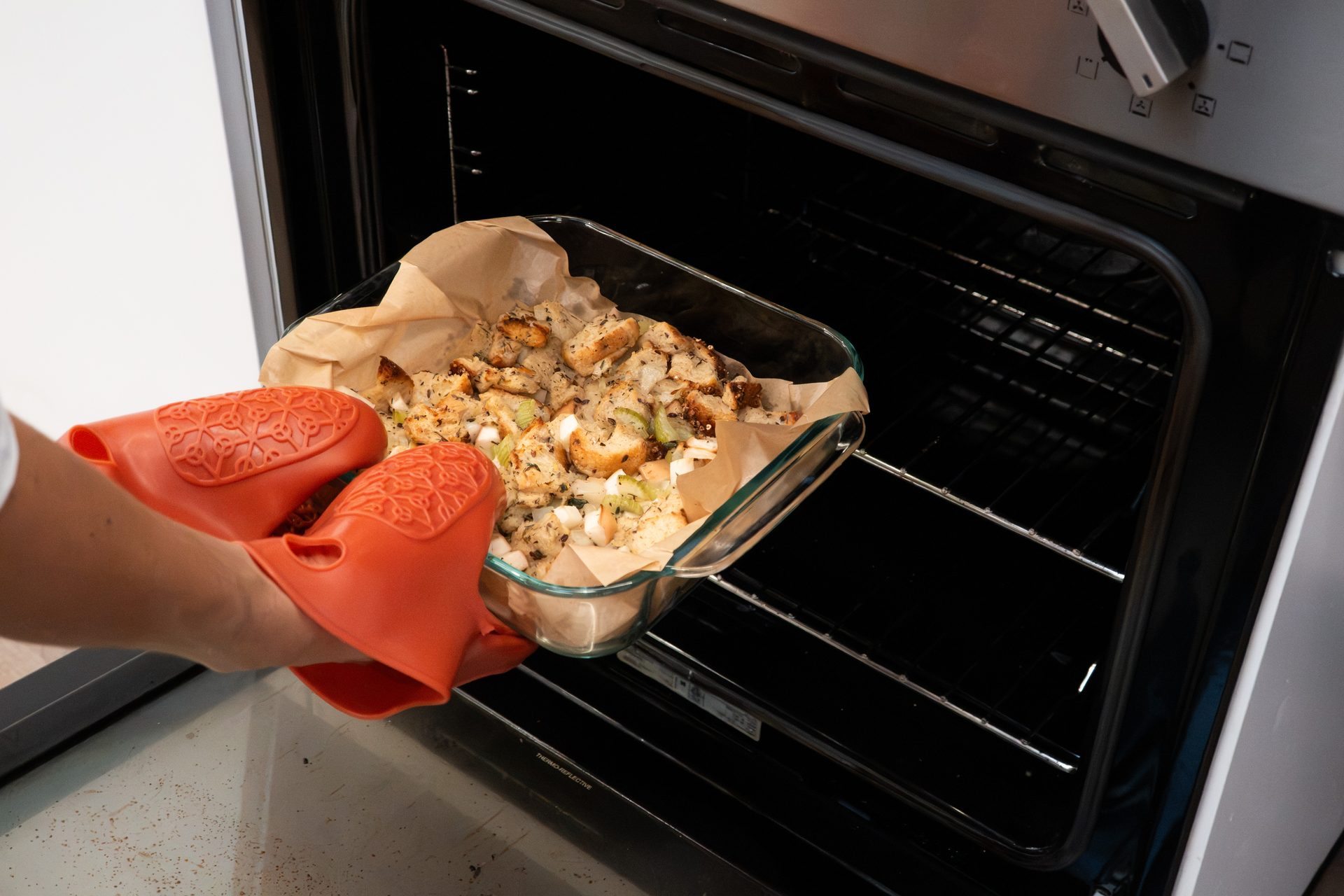
7. Transfer the bread mixture into the baking dish and spread it out. Cover with aluminum foil and bake for 20 minutes. Remove the foil and bake for an additional 10 minutes, until the broth is absorbed and the top is golden and crisp.
Before baking, look at the stuffing together and invite your child to predict what will change. When an adult removes the foil, ask what they think the uncovered baking time might do to the surface.
Once the finished stuffing is cool enough to taste, return to those predictions. How does the crisp top compare with the softer bread underneath? Can they recognize the apple or herbs? Describing flavor, texture, appearance, and aroma helps children build the language to explain their own observations.
Exploring From Scratch vs Store-Bought
If your family usually prepares stuffing from a package, this recipe offers a familiar starting point for comparison. Look at the package together and ask which ingredients your child recognizes from the dish they made.
Follow the conversation according to your child’s interests and experience. Younger children may focus on flavor and texture, while older children can investigate ingredient lists, preparation methods, nutrition, and cost. There is room to consider convenience, too: what changes when some of the work has already been done?
These questions reflect November’s exploration at LKA, where students build food literacy by comparing familiar foods and discovering how they are made. The aim is to give children the understanding to ask questions and make thoughtful choices of their own.
Giving Older Children More Responsibility
For an older child, making stuffing can become an opportunity to plan and prepare a contribution to the meal. Ask them to read the recipe from beginning to end, identify what needs to happen first, and decide which steps require an adult nearby. They might measure ingredients, prepare the broth mixture, watch the vegetables for doneness, or keep track of baking time.
If your child hasn’t been introduced to knife safety, or would benefit from a refresher, explore our knife safety videos before beginning. Let their growing skills guide how much responsibility they take on, with support available when they need it.
When the stuffing is ready and the dish is safe to handle, invite them to bring their contribution to the table and explain how they made it.
A Lesson Worth Gathering Around
A family meal gives children and teens the opportunity to see that cooking isn’t only about learning to feed themselves. It’s also a way to contribute. To care for someone. To bring something to the table that wasn’t there before.
Four slices of bread. An apple. A few vegetables. A sprig of sage.
None is particularly remarkable on its own. But give a child the tools, the responsibility, and enough room to do the work, and those ingredients become something they can share.
Looking for more recipes? Visit the LKA blog.