
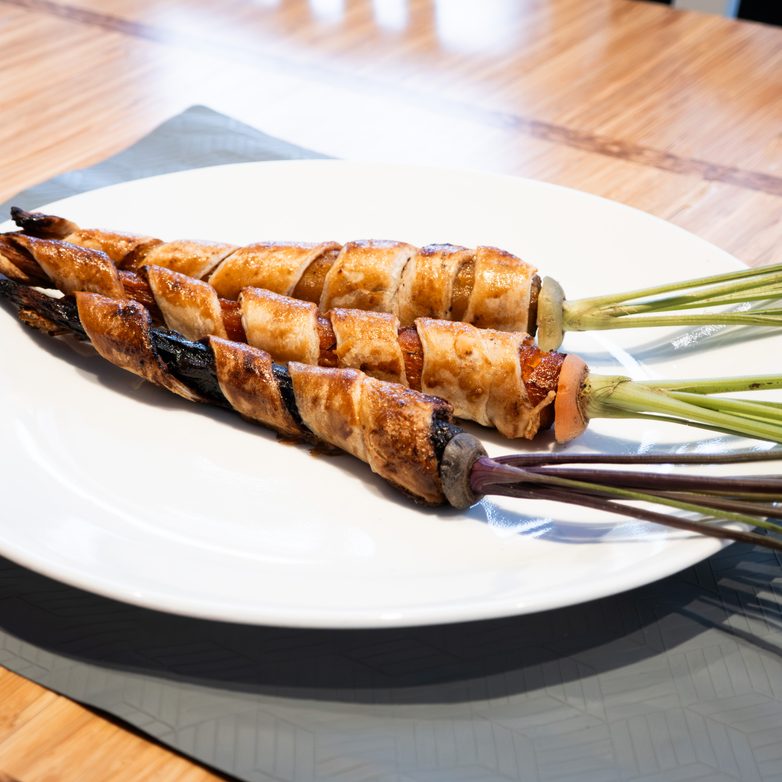
Herb & Brown Butter Carrot Twists: Watching Ingredients Transform
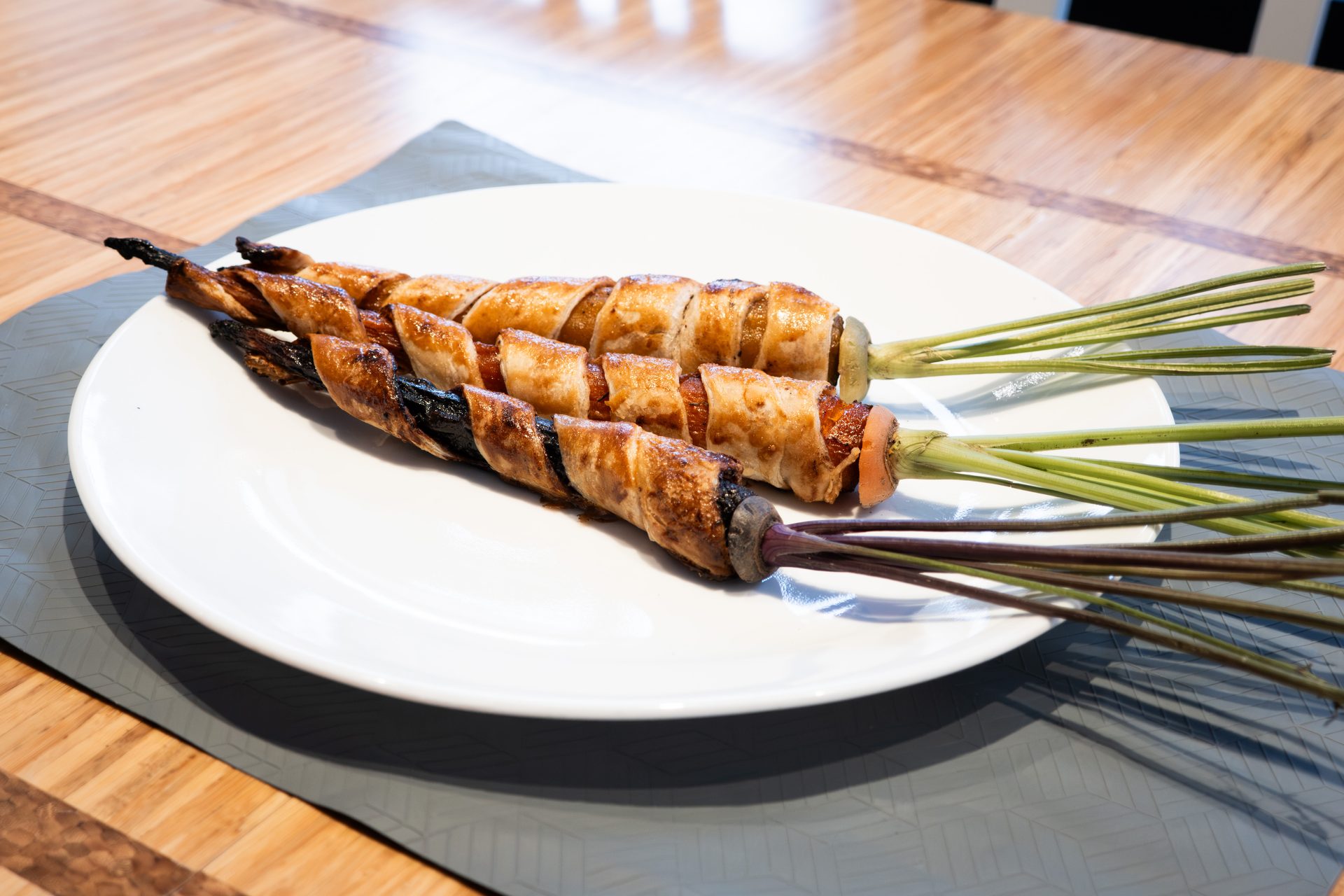
Kids in the Kitchen is our blog series, where in collaboration with Click and Grow, we’re sharing Little Kitchen Academy recipes and tips for getting kids interested in food and involved in the kitchen. A Montessori fall cooking activity can be as simple as putting a seasonal ingredient on the counter and giving your child a real role in preparing it.
October makes change hard to miss.
Mornings get cooler. The light disappears a little earlier each evening. And in the kitchen, some of the best lessons of the season come from watching ordinary ingredients change, too.
Butter turns golden and nutty when cooked over low heat for a long period of time. Carrots soften as they roast. Puff pastry goes into the oven pale and flat and comes out crisp, layered, and golden.
For a child, these transformations are worth slowing down for.
This month’s recipe, Herb & Brown Butter Carrot Twists, wraps roasted carrots in strips of puff pastry after they’re coated with brown butter, honey, oregano, and herbs. It’s an October Montessori cooking activity built around observation, patience, and real culinary technique.
Rather than telling your child what will happen at every step, give them the chance to notice. What changed? How do you know it’s ready? What do you think will happen next?
Sometimes the best thing we can do in the kitchen is leave a little room for discovery.
A Montessori Fall Cooking Activity
The acorn squash this recipe uses gives them plenty to work with. It’s firm and ridged on the outside, with a center full of seeds and fibers that need to be scooped away before anything else can happen. Give a child the right tool, show them what needs to be done, and let them work through it. Remember, it doesn’t have to be perfect!
This month’s recipe, Parmesan & Rosemary Roasted Squash, turns that work into something the whole family can share: thick slices of acorn squash coated with Parmesan, fresh rosemary, herbs, and spices, roasted until golden and served over a simple garlic yogurt sauce.
As you cook, let your child take their time with each step. They will scoop, measure, toss, smell, taste… There is capability being built in all of it.
Prep time: 50-60 minutes | Serves: 2 portions
Ingredients
- 3 carrots
- 55 g unsalted butter
- 1 tbsp honey, or sweetener of choice
- 1 sprig fresh oregano, chopped
- 1/8 tsp dried thyme
- 1/8 tsp dried basil
- 1/8 tsp salt
- 1/8 tsp pepper
- 1/2 sheet puff pastry
- 1 egg
Instructions
- Preheat oven to 425°F.
- Brown the butter by placing it in a pot over low heat. Let it melt and foam until the milk solids turn golden brown and accumulate at the bottom of the pan.
Montessori Moment: Watching Butter Brown
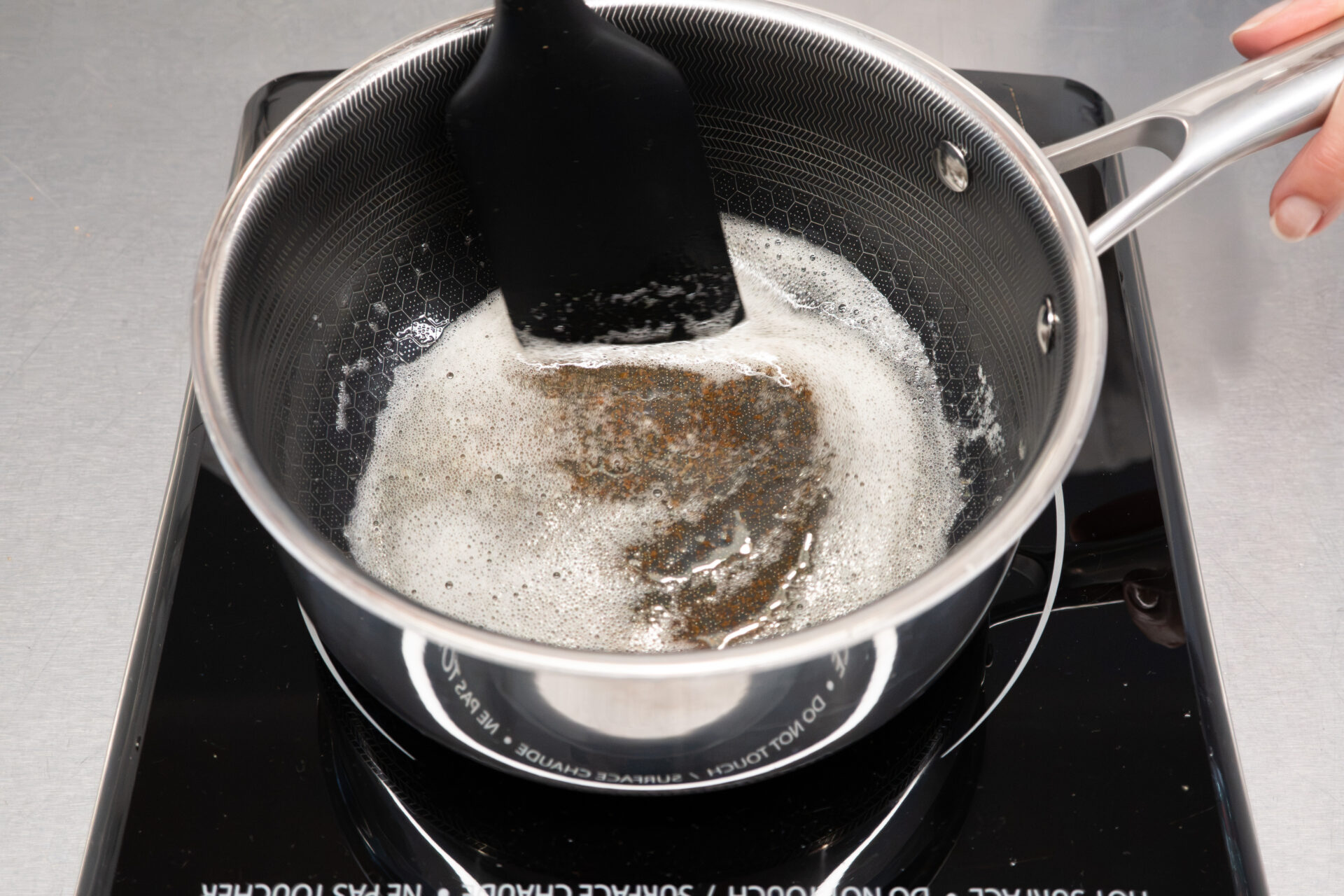
Intelligent Purpose: Browning butter introduces children to a real culinary technique where observation (refinement of the senses) matters. The direct purpose is preparing the butter for the recipe. Indirectly, children practice patience, concentration, and using sensory information to recognize change.
Point of Interest: Butter doesn’t simply melt. It changes. Invite your child to watch the bubbles and foam, notice the color deepening, and smell the difference as the milk solids begin to brown. Ask: “What has changed since we started?”
Control of Error: The butter provides sensory clues. Its color, aroma, and the browned milk solids at the bottom of the pan all signal its progression.
Because the pot and butter will be hot, this is also an opportunity to model that independence doesn’t mean doing everything alone. Knowing when a task requires an adult is part of becoming capable in the kitchen.
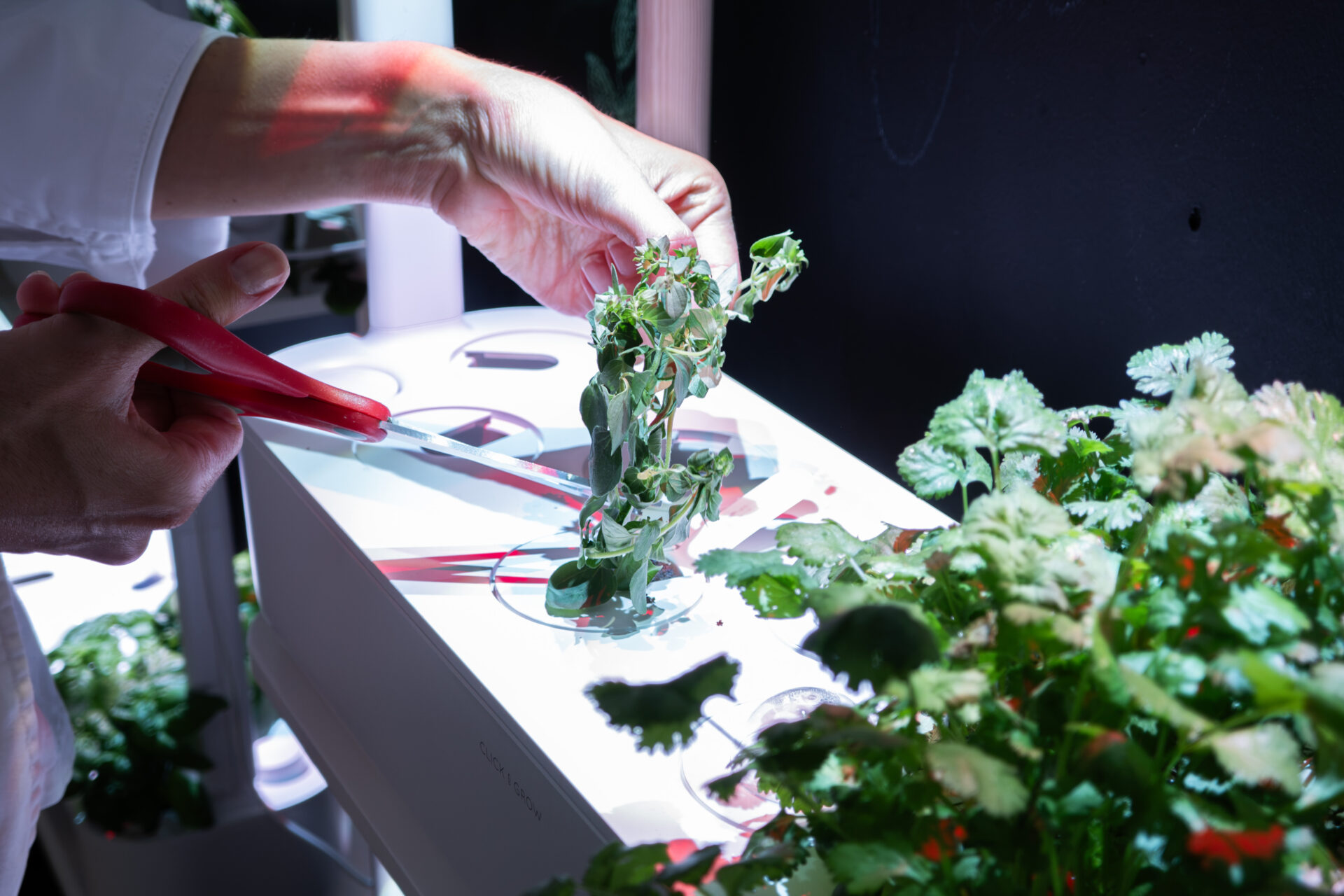
3. Add the honey, chopped oregano, thyme, basil, salt, and pepper to the brown butter. Mix in.
🌱 From the Living Food Wall: Oregano is one of the ingredients students can grow and harvest from our Click & Grow Smart Gardens. When children encounter an herb first as a plant and then as an ingredient, they begin to understand food as something that is grown, harvested, prepared, and transformed.
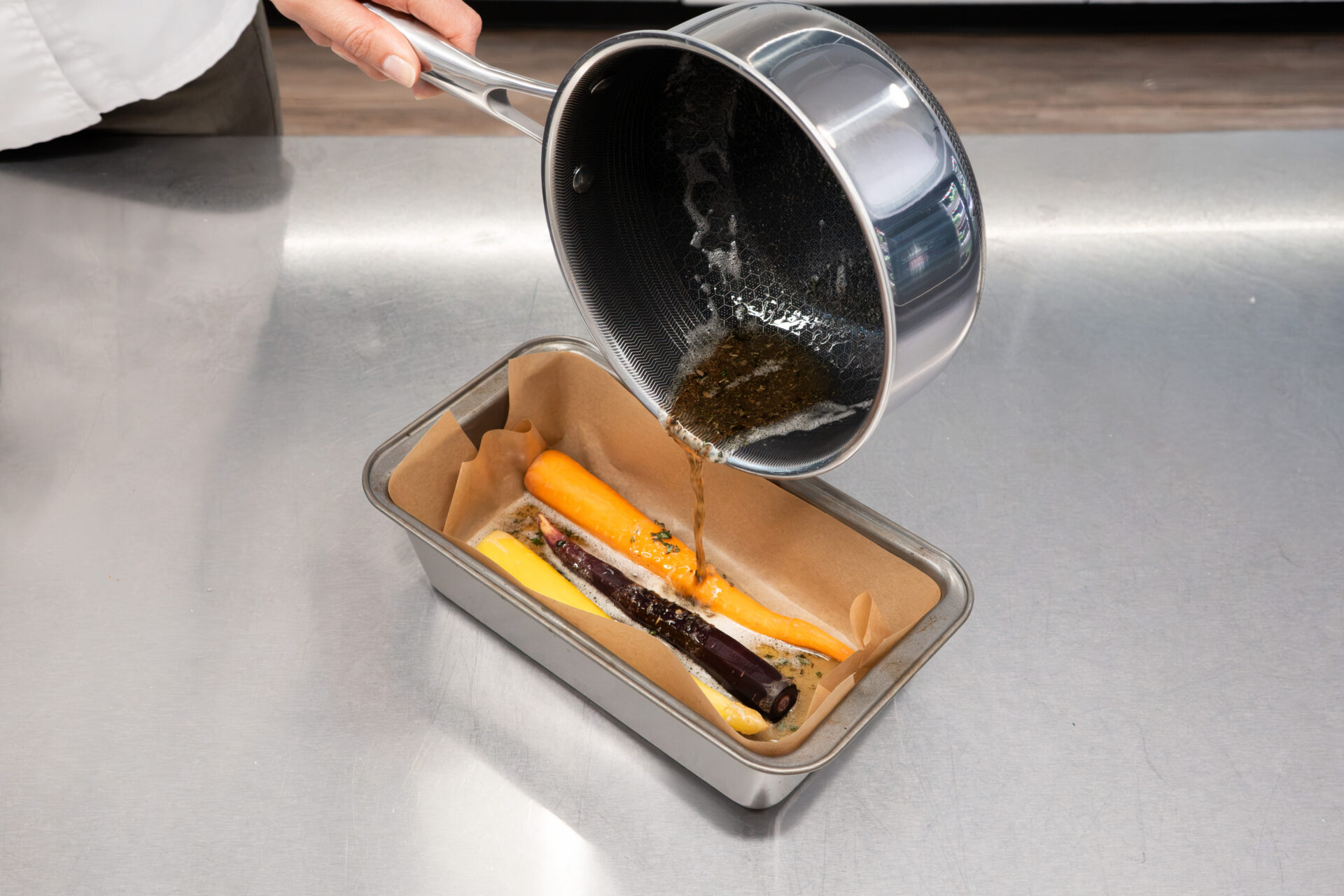
4. Pour the brown butter mixture into a large loaf tin.
5. Peel the carrots and place them in the loaf tin with the brown butter and herb mixture.
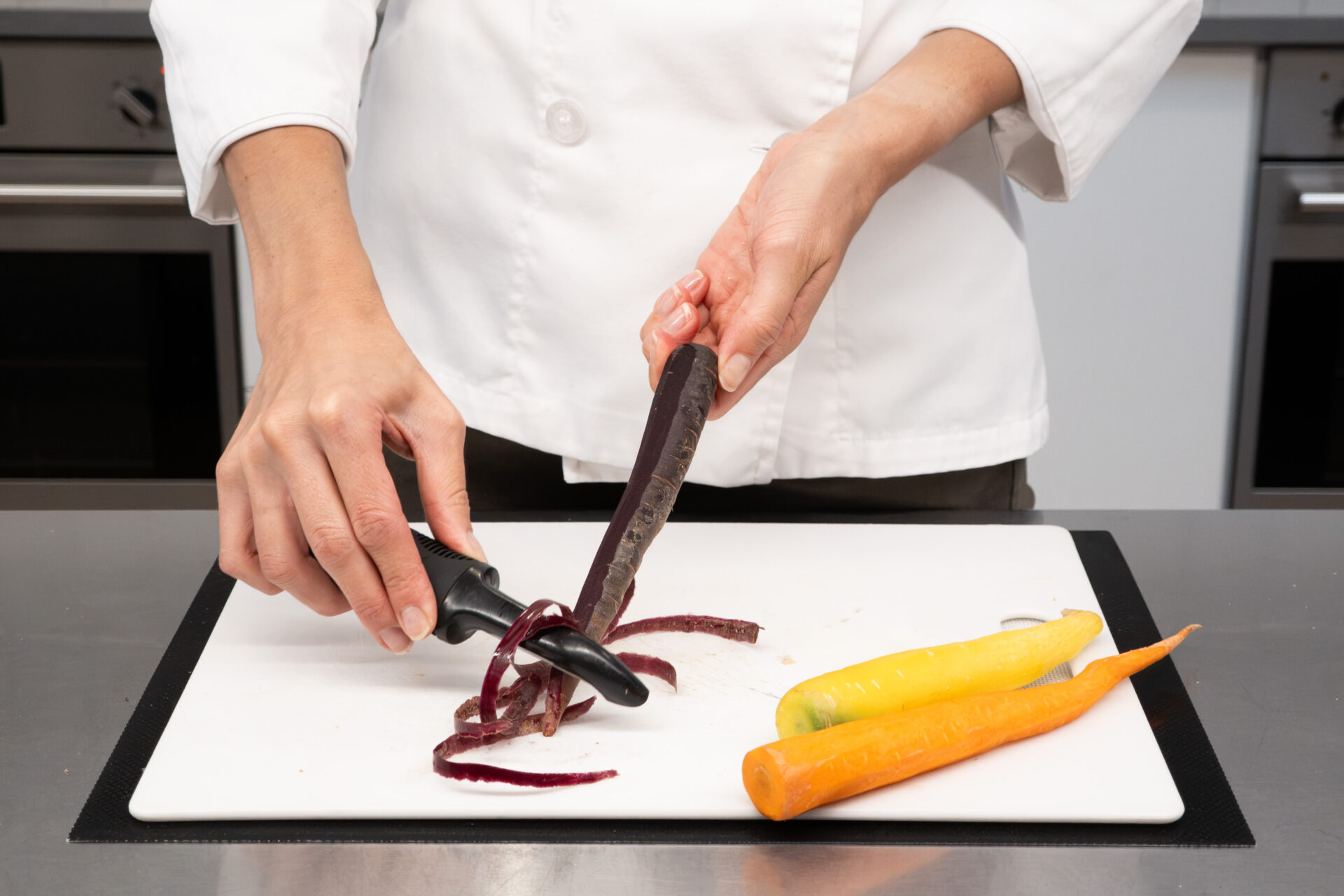
Peeling gives children immediate feedback from their work. One pass of the peeler reveals a brighter surface underneath. Another removes what was missed.
Encourage your child to rotate the carrot themselves and decide when the entire surface has been peeled.
This is purposeful repetition: the same motion, repeated with concentration, until the work is complete.
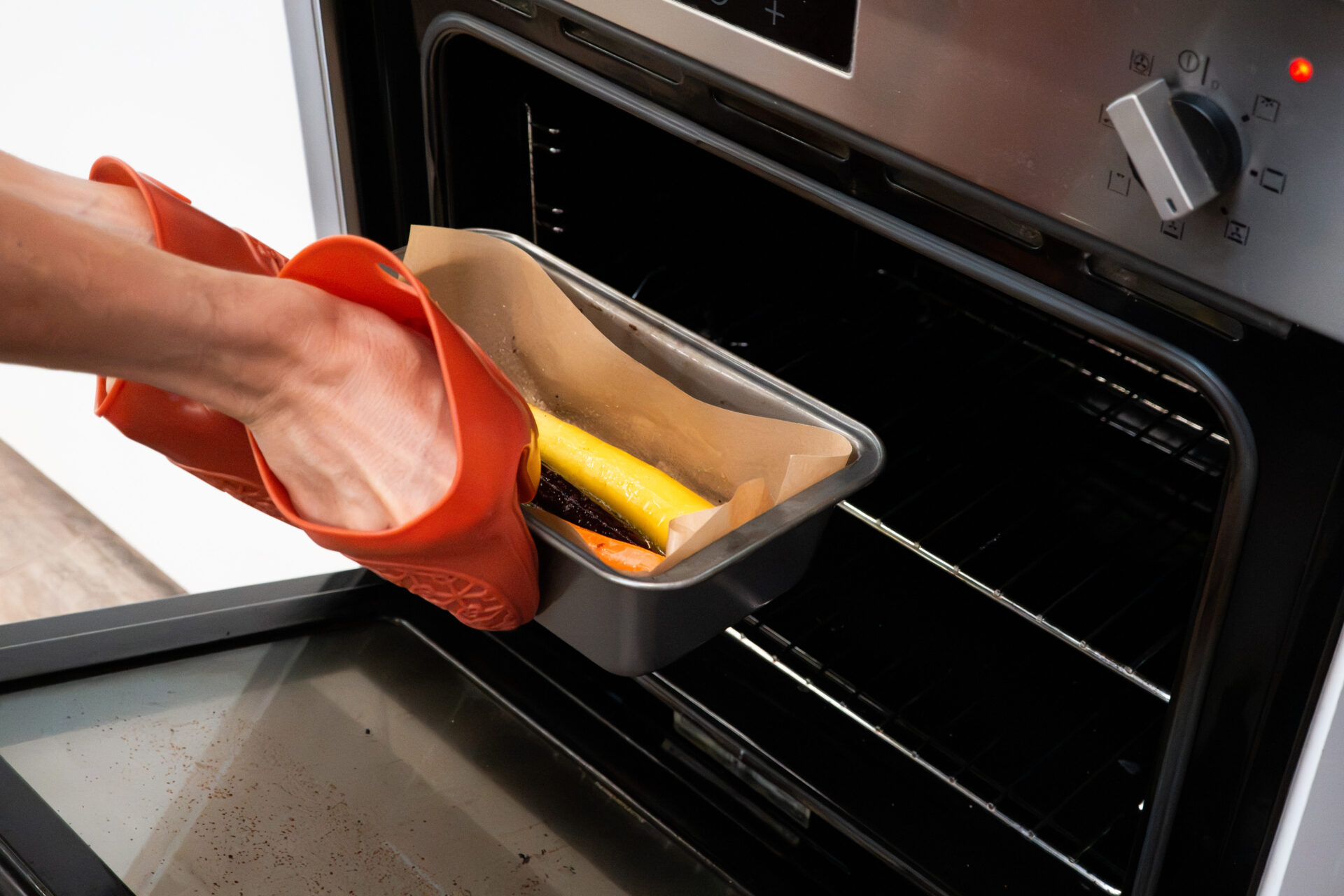
6. Bake the carrots for 15–20 minutes until fork tender. Then let them cool completely.
Here comes another part of cooking children don’t always love: waiting.
The carrots need to cool completely before the next step. Waiting isn’t empty time. It’s part of following a process and understanding that some things can’t, or shouldn’t, be rushed.
7. Cut the puff pastry sheet into strips of even thickness, about 1-inch wide.
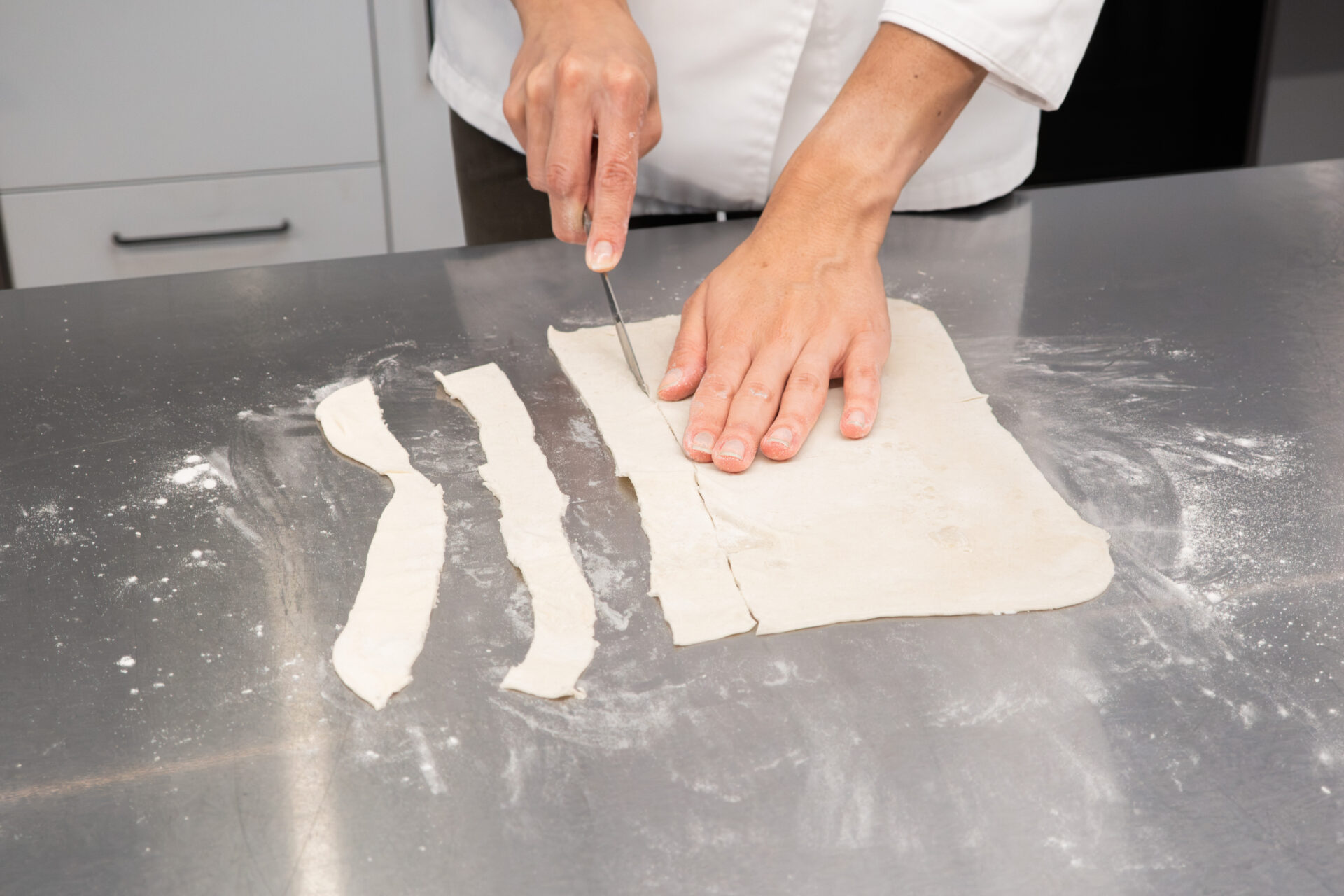
A Challenge in Precision
For an older child with established knife skills, cutting evenly sized pastry strips introduces a different kind of challenge.
Instead of correcting each strip, give them a reference: about one inch wide. Then let them compare their work.
Are the strips roughly the same width? Which one needs adjusting? Can they find a way to make the next one more consistent?
If your child hasn’t been introduced to knife safety yet, or you’d like a refresher before they try, check out our knife safety videos here: https://littlekitchenacademy.com/progressive-knife-set/knife-safety/
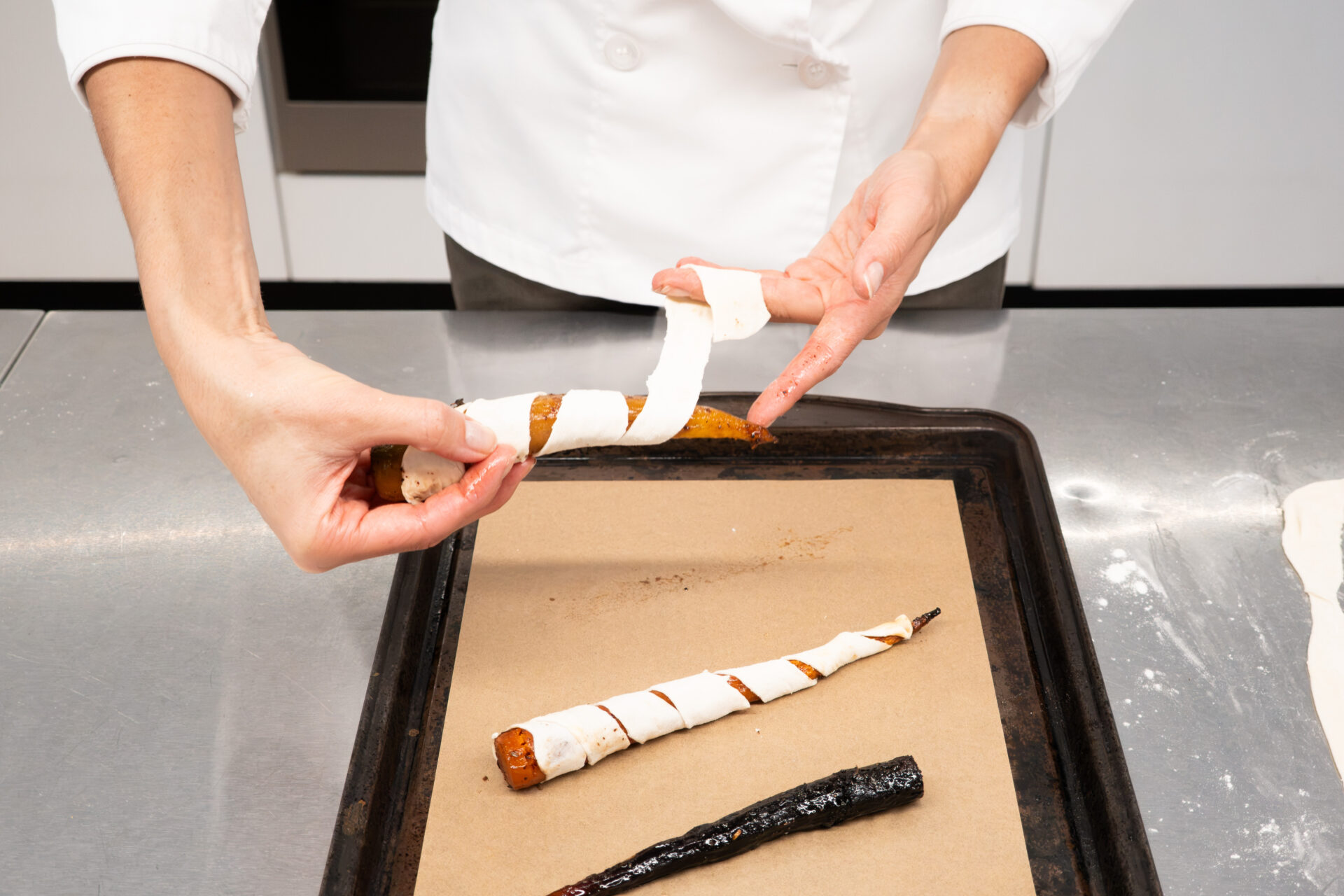
8. Once the carrots have cooled completely, wrap them in the puff pastry strips and place on a lined baking tray.
Wrapping asks both hands to work together: one stabilizes the carrot while the other guides the pastry around it.
There’s no need for every twist to look identical. The goal is controlled movement and enough overlap to keep the pastry wrapped around the carrot.
Let your child work out the motion.
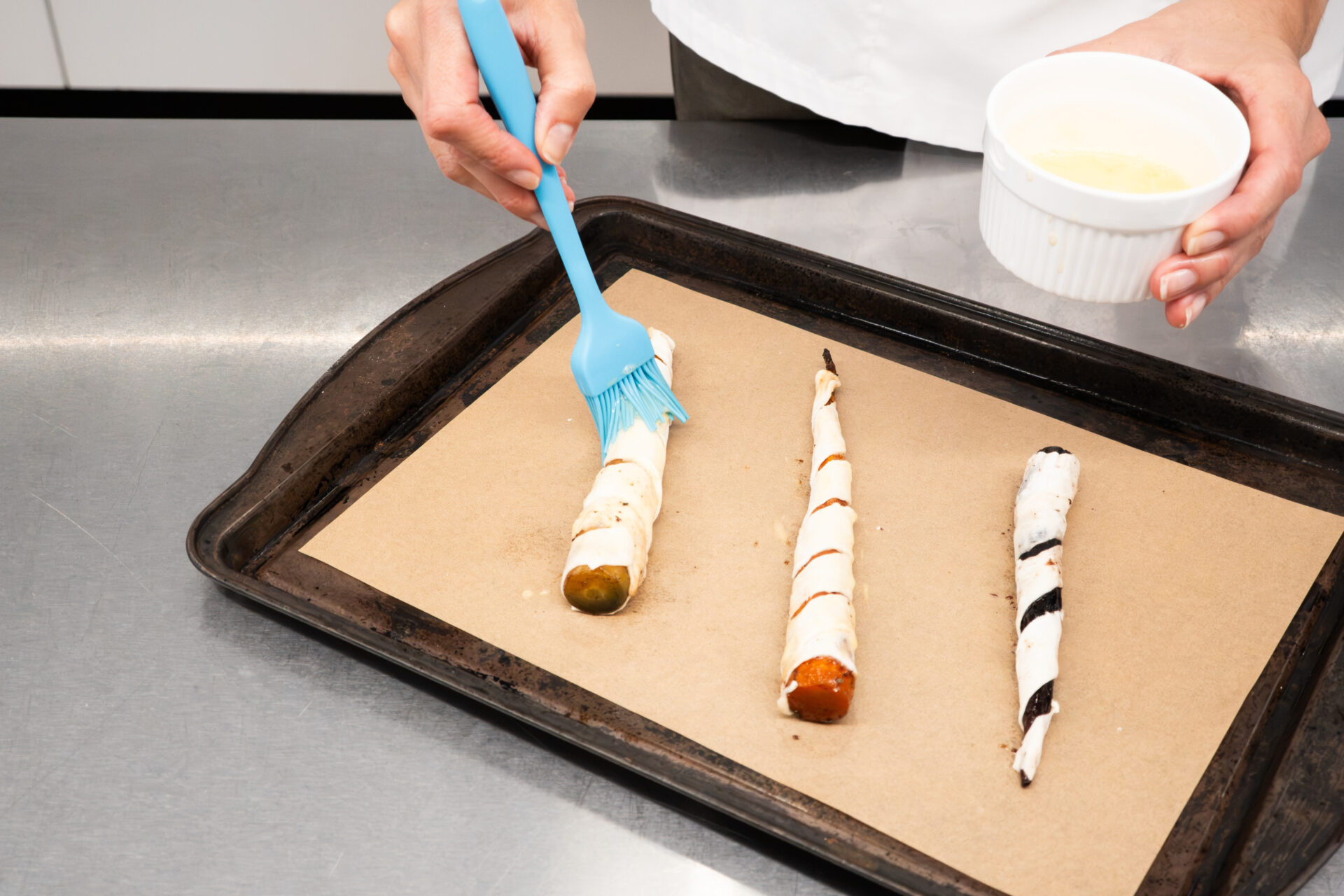
9. Whisk the egg and brush it on top of the puff pastry.
Brushing on the egg wash is another exercise in control. Too little leaves patches uncovered; too much pools on the tray.
Give your child the brush and let the pastry show them where they’ve already been.
10. Bake the carrot twists for 6-10 minutes until the puff pastry is golden brown.
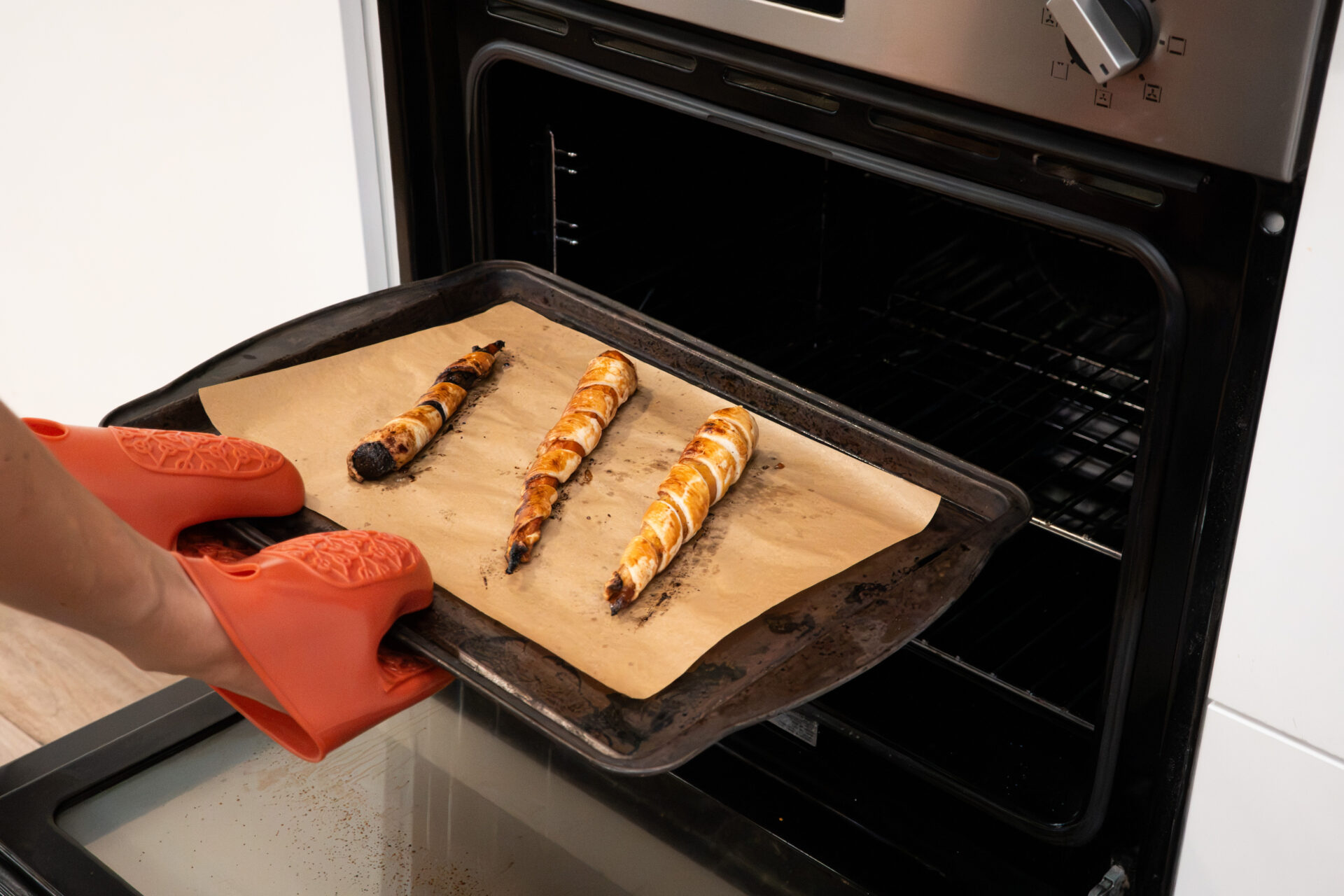
Return to where you started.
What happened to the pastry? What happened to its color? Its height? Its texture?
The transformation your child predicted earlier is now something they can see for themselves.
11. Serve the carrot twists with your dip of choice.
An October Montessori Cooking Activity for Older Children
For an older child, challenge them to think beyond completing individual steps and manage the sequence of the recipe itself.
The carrots need to roast. Then they need to cool. The pastry needs to be cut. The twists need to be assembled, brushed, and returned to the oven.
Ask them to read through the recipe before beginning and decide what needs to happen when.
That’s a different kind of independence. They’re no longer simply following the next instruction. They’re beginning to understand the whole process.
Let the Ingredient Do the Teaching
Children ask a lot of questions in the kitchen.
How do I know when it’s done? Why did it change color? What happens if I do this? What comes next?
We don’t always need to rush in with the answer.
October gives us plenty of reminders that change happens gradually. Brown butter needs time to develop its color. A carrot needs time to soften. Puff pastry needs heat before its layers reveal themselves.
Cooking gives children something increasingly rare: the opportunity to observe, experiment, wait, and find out.
Give them the real ingredients. Give them the right tools. Then give them enough space to see what happens.
That’s where curiosity starts becoming capability.
Looking for more recipes? Visit the LKA blog.